company - education - coffee
Showing posts with label guatemala. Show all posts

Tuesday, May 06, 2014

Santa Ana & Idolia: a new #directtrade relationship


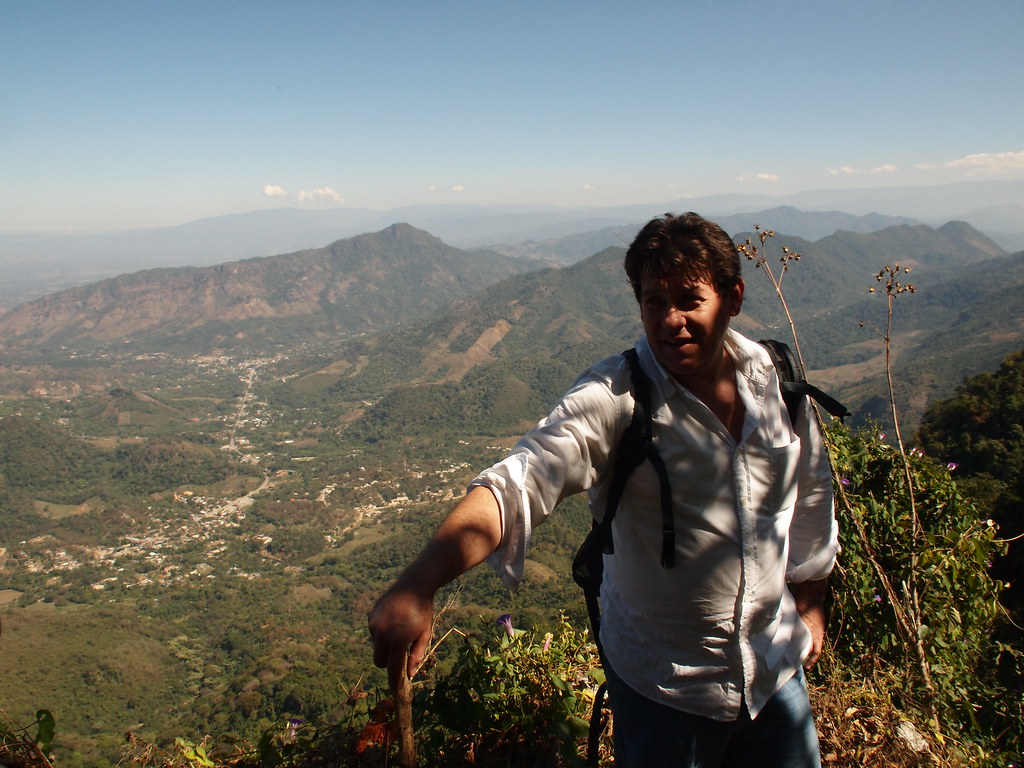
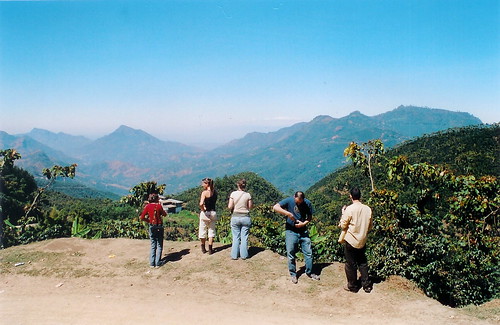
The view of the Santa Ana y Anexos wet mill, Pueblo Nuevo ViƱas, Guatemala

On the Ground: barismo's founder, Jaime van Schyndel reports on a new relationship with Santa Ana y Anexos in Guatemala for the 2014 crop. This is barismo's first year working with Santa Ana of Pueblo Nuevo Vinas, and we are excited to share this developing Direct Trade partnership. Stay tuned for more info as we build up to the arrival of this years various two lots, Santa Ana and Idolia. 

 
Fernando Diaz
Santa Ana lies in the southern portion of Guatemala, not more than an hour or so from Guatemala City with no traffic.  On the drive up, we passed a soccer field named 'Estadio Flor del Cafe' or the coffee flower stadium, so we knew we were entering a serious coffee production area. The area is beautiful, and being outside the coffee buyer favorite areas of Huehuetenango or Antigua, it feels much more isolated and less traveled by other coffee buyers.

Our host on this trip is one Fernando Diaz, a calm and charming person who cares deeply about returning his farm to the days when it had high placement in the Cup of Excellence, and long term going a bit farther.  He takes this in stride with his other important goals, to enjoy the land and what it offers by sharing his experiences with his family.  Many of the discussions we had centered not around ambition but desire to have and provide a good quality of life for his family and the families living on the farm.  As someone who works deeply in the hectic coffee industry but also has a 3 year old at home, this line of thought is something I can relate to.  Sustainability isn't merely the activism but also balancing the feasibility of the business, and one's personal life.


The patios at Santa Ana
Santa Ana y Anexos is composed of four farms and one wet mill.  Fernando's father passed along the main farm previously known as Santa Ana to his four children, and the Anexos were born.  One of the four retained the main name of Santa Ana, while the other three were given new designations but all are currently under Fernando's care.  barismo is bringing in a mixed lot of Santa Ana and one of the other farms, Idolia.  Both of these lots were truly solid on the cupping table, both are bourbon, and both had uniquely aromatic cup profiles.  Once we toured the farm and walked the many sub plots on Santa Ana and Idolia, we requested a few follow up samples from plots that looked unique and those we felt held potential.  Ironically, the lots we picked out already composed most of the samples we chose from touring the farm.  Fernando also dropped us one extra sample to show his picking vs the normal 'ripe' standard.  It allowed us to cup side by side samples of picks that measured differently in the sweetness of the coffee cherry but were prepared the same.  We know this because Fernando is doing all of his picking based on sample Brix measurements with logging and sample roast testing with three different quality consultants in Guatemala.  Add in his intensive separation of lots plus detailed data logging of patio coffees and this makes him one of the most organized farms we will work with this year.

Nursery at Santa Ana y Annexos
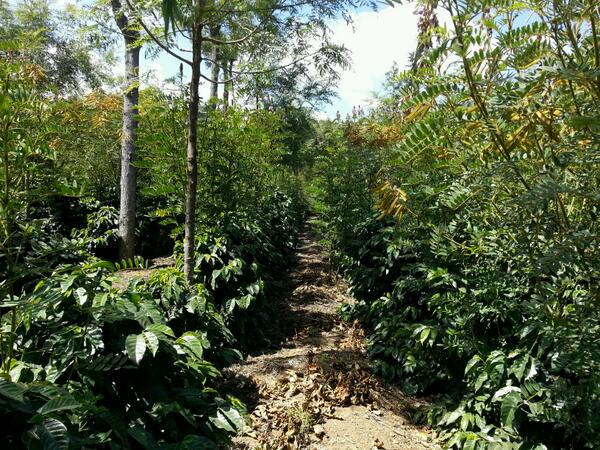
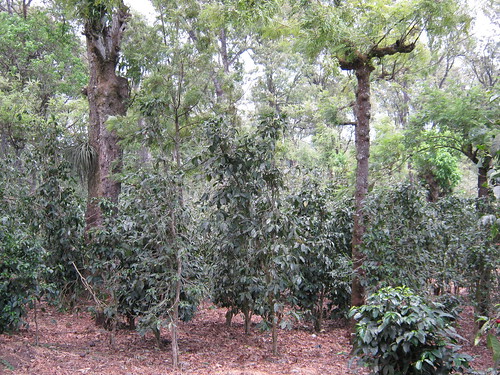
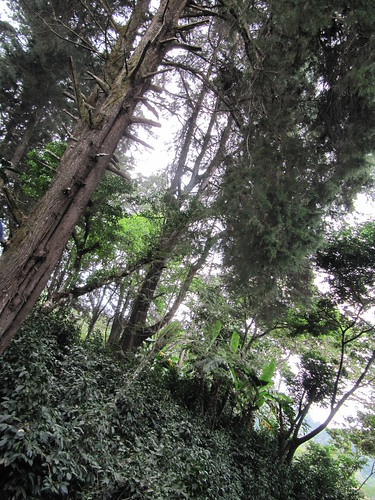
Fernando takes a pretty relaxed approach for someone who is massively overhauling his farm.  He has filled a large nursery with coffees acquired from his friend (and ours) Luis Pedro Zelaya of Bella Vista Mill. What you'd expect from Fernando with all this investment and attention to detail is driving ambition, what you've got is an analytical engineer looking at the next 10 years for these farms.  As cool and intriguing as his projects are, the farm has many obstacles to overcome in the next five years.  As most of the farm is planted with varying canopies of evergreens and native trees, the entire mountain feels like a bit of a mashup of varied growing scenarios.  Depending on which piece of land you are on, you have different sun patterns, different soil, and often different plantings covered by varying shade types.


50+ year old bourbon tree
The most intriguing part of this is a plot on the steepest side of the mountain that contains some seriously old bourbon trees.  These trees have stumps that are old and in need of serious trimming, even possible replanting in some areas.    Fernando's secondary goal is to figure out if he can make furniture from many of these trees as they get replanted.  When I asked if he'd sell a few, he recoiled at the idea.  It's clear he was thinking of something for his family and visitors of the farm to enjoy.  That's something we can get behind, especially in a specialty coffee industry that is currently gripped with rapid expansion and a venture capital influx.  While the current production of the farm is relatively small for the size, in time this farm should see a renaissance.  We feel the lots we are bringing in this year are simply a marker of both current peak quality on this farm but also point to some serious potential in the next few years.  

On the Ground: barismo's roaster Chris Malarick reports on his travel to Costa Rica to visit our producer partner Finca El Quizarra & Carole Zbinden.

It's exciting to find a new producer partner during our travels to coffee producing areas. Nothing quite rivals the feeling of returning year after year to the conversation with an already established grower relationship.  I had the opportunity to spend a day one on one with Carole Zbinden of Jardin De Aromas (Quizarra) during my travels to Costa Rica this spring.   I was honored to be able to talk to her about her farm, the industry sides of both growing/roasting, and of course to taste coffees. We've been working with Carole for three years now and each year we are taken aback by the quality of harvest she produces from her 1300 msl property. Usually land this low struggles with quality issues due to a variety of factors.  It is because of this that it's often looked past by roasters/green buyers. Jardin De Aromas is definitely an anomaly in that regard as it bucks the trends. Carole has implemented a very strict and regimented pruning schedule that has the entire farm systematically trimmed and uprooted in waves so as to not hinder harvest too drastically while focusing on a cycle that creates new 'young' plant tissue every year. Not only has she overhauled the maintenance systems of the farm land itself (which you know as Finca El Quizarra), but 3 years ago she started her own micro-mill which she named Jardin De Aromas.  Translating to the Garden of Aromas, a name she chose as she felt her father kept his coffee farm like a flower garden.

The investment in that micro mill is now allowing her to process her own cherry and regulate quality at another level.  In addition, Carole has also made her entire operation hyper-sustainable by reusing almost all byproducts. Water from fermentation is irrigated into a special grass that can make use of the added nutrients and pulped cherry skin.  The pulped fruit is used to fertilize areas of the farm undergoing pruning.  Nothing goes to waste in this process.

Always looking towards the future, we're excited to see experiments Carole has going at her farm now.  From new varieties like SL28 to including drying practices like raised beds. Getting the chance to spend a day with Carole and see the fruits of our partnership flourishing and continuing to grow was a huge learning experience for me and really helped me grasp the importance of direct trade relationships with healthy dialogue, once again affirming why it is we do what we do.


Keep it local Somerville, MA: barismo Founder, Jaime van Schyndel gives a status update on roasting in our new space.

The new roasting setup in Somerville is primed and ready.  We are taking our time to shift over as we wait for the next wave of coffees to arrive.  We also have some new bits and pieces of technology we are working with to give us a little more control that need a little lead time to get used to.

Many of you have asked us when the space will be open, the answer is join our notification list to get first invite to our next event in the space.

As we are moving on from the introductions we've been attempting to make to cafes in Somerville (more on that experience later), we'll be focusing on our loyal and dedicated customers getting a chance to come by the space.  We have a cart setup for events we'll be doing there, some Coldbrew tastings, and if you follow us on twitter we'll update you about general open house events in the Aeronaut as we know about them.

Tuesday, March 11, 2014

Origin Week 2014

Gustavo Alfaro at Simon's in 2011

Evaluating for Quality: barismo's Roastery Manager, Tim Borrego shares about the upcoming origin trip where some of our long time accounts will be travelling with us to Guatemala to visit farms and producers whose coffees they serve at their cafes.

At the end of this month barismo is taking a group of our local accounts to visit our producer partners in Guatemala. Everyone involved is excited and we expect that there will be more updates from that trip once everyone returns. To give you a little bit of context of what this Origin trip is all about, it is important to talk about Origin Week that we hosted last year. In April of 2013 we had many of our producer partners in town for a national coffee conference. We took the opportunity to organize a week long series, a mini coffee university course, if you will, focused on sharing knowledge and stories with the local community. So this year Origin Week 2014, we are sending some local cafe owners who work with barismo to Central America to connect with some of our relationship producers at their farms and mills.
The cafe owners who are traveling with us to Guatemala this year choose a local coffee roaster instead of shipping from national roasters because they ask their customers every day to frequent their local business rather than supporting the national cafe chain across the street. However the value added goes beyond authentic local vendors or sustainable bike delivery, these cafe owners are invested in giving their barista staff a leg up in the coffee industry.
Access to knowledge and opportunity gives the service industry barista opportunity to gain skills beyond latte art, which is the equivalent to a high school degree in the coffee industry. We push for more 'higher-ed', taste focused education, in the Greater Boston coffee community. Some of the next few posts will be coming from someone who began his coffee career as a barista at Voltage Coffee and Art, he has worked his way up the ladder at barismo, and is just back from a trip visiting our Producer Partners in Costa Rica.
For the current generation of baristas who want a career in coffee, look for cafes that support authentic product: local roasters, local knowledge, local opportunity in the community you live in. 


Canonical, Coffee Education and Tech Tips: Practical tips and advice to give you the tools to brew better coffee. Brought to you by Pete Cannon, who handles barismo's in house training, education, and technical services.

Jumping back into the water series from last week. We will be focused on the two major water systems in the Metro Boston area as most of our area accounts use one or the other:
We've tracked both over time, and while water quality fluctuates seasonally, the range we've gotten is similar between both. This is based on line water that has gone through a carbon filter; the MWRA data is based on our East Arlington roastery, and CWD data from dwelltime (mid-Cambridge). Numbers are stereotypical of tests done between Summer 2013 and present.

MWRA

CWD

pH 8.0 8.0 - 9.0
TDS 94 ppm 90 ppm
Total Hardness 15.6 mg/L 12.3 mg/L
Alkalinity 65 mg/L 60 mg/L

Numbers are overall similar, except that pH swings have happened much more dramatically in Cambridge. While alkalinity is similar, pH tends to fluctuate more in Cambridge. Most concerning is chloride contamination; Route 2 runs just close to Fresh Pond Reservoir, leading to large amounts of road salt ending up in the reservoir. While safe to drink, it can pose significant problems for protecting equipment.

For those further interested in water quality, we highly recommend this talk by Scott G. of La Marzocco. At their worst, chlorides cause significant corrosion to brewing equipment. Stay tuned next week, when we'll follow up with filtration options and our recommendations.


Stay Fresh Updates:Events, classes and education, new coffees, and much more. Sign up for updates here!

Saturday, March 15, 2014 from 9:30am-2pm 
barismo at the Somerville Winter Farmers Market 
Grab a freshly roasted retail bag of barismo coffee from the well stocked selection, as well as a fresh, made-to-order pourover or a delicious cup of cold brew iced coffee. Catch us early cause it gets busy fast! We are there every week through the entire market. More info about the market from their facebook page or on twitter @SomWinterMarket

Sunday, March 16, 2014 from 5pm-7pm 
Espresso 101 class hosted at barsimo 
"A barista will explain grinding, tamping, and more, then watch as you pull shot after shot. Like an espresso coach, he’ll give you pointers on everything from your mouse tails to your brew’s hue. Small classes are taught monthly on Sunday nights" - from a recent Boston Globe article featuring barismo's Espresso 101 class. Sign up Here!

Tuesday, March 04, 2014

El Xallum and other Epiphanies

Christian at El Xallum

On the Ground: barismo's Jaime VanSchyndel reports from Guatemala for the 2014 crop. We are excited to share developments of our Direct Trade partners. Stay tuned for more info as we build up to the arrival of this years various lots.

This year in Guatemala, we pursued several new farms to work with where we could possibly be a good match.  Our vision of a good match is having enough buying power to effectively get the farms attention, as well as the farm either being an excellent coffee or having the potential to produce improving quality in the future.  Of four new farms we found, one is on lake Amatitlan and was named El Xallum.  I ran across the son of the owner, Christian, in a cupping lab and he seemed eager to get my attention and have me cup their coffee.  It turns out this 120 year old farm with heirloom bourbon trees had been hit by a hurricane, the eruption of Pacaya, and a mysterious pollination problem (we think the removal of local bee hives is related) in the last few years.  The current yield on this farm was way down having just completed major pruning, they were looking to plant an entirely new section with an eye toward the future.  The Bourbon he did have, cupped clean and had potential, but it was the visit and story he told that sold me.  Once on the farm (a narrow sliver down the mountain they describe as a pencil), he gave a quick tour.  As we struck up a conversation about yellow bourbon being better than red, he got very excited and took me down to an isolated coffee tree.  On the tree stood one lone Yellow cherry I plucked and tasted the fruit.  I proclaimed it sweet and he agreed.  He pulled up his phone and showed me a picture of a brix meter reading.  He then told me how they took the meter and walked the farm sampling cherry looking for the sweetest fruit until they found this tree.  it measured a 22 when others had been 16-18.  They decided to pick all the fruit on this tree to create a nursery for the new plot.  This, I will tell you is not a common practice.  The selection of seed is often for yield and disease resistance, so I was impressed.  This was the point where I advised that the new plot be named 'Epiphany' given the brilliance of the notion or 'Amarillo Dulce' for the more literal minded.
- Jaime | follow on twitter @jaime_vans and this blog for continued updates on this years harvest.


Evaluating for Quality: barismo's Roastery Manager, Tim Borrego revisits the reasons behind barismo's commitment to our specific brand of Direct Trade. This is the time of year where the seasonality of what we offer is felt the most.

Each year we see beloved coffees come and go, and this time of year when it is especially apparent. We have excellent stories of progress on beloved farms like El Bosque and fresh news about new relationships like El Xallum as reported in this post. At the same time we are working our way through the end of last years crop coffees. The coffee harvest season in Central America is roughly December to March so we spend a good amount of time travelling, touching base and gathering good intel on what is happening there at this time of year. It is bitter sweet to see Buena Esperanza, and the Finca Salaca lots disappear from the line up, but it is a good reminder to all of us about the seasonality of coffees. Our wholesale partners know this an are able to relay the message to their customers, but it can be difficult to smooth things over completely when someone hears that El Bosque will soon be gone (for a short while). These coffees have a finite life time and should be enjoyed in season, in the meantime we eagerly anticipate the fresh crop arrivals. Hopefully our travel reports are able to spark some hope to hold you over until then!
- Tim | check the blog for updates and contact directly at tim@barismo.com


Stay Fresh Updates: Upcoming events, classes and education, new coffees, and much more... Sign up to receive updates.

Saturday, March 8, 2014 from 9:30am-2pm
barismo at the Somerville Winter Farmers Market
Grab a freshly roasted retail bag of barismo coffee from the well stocked selection, as well as a fresh, made-to-order pourover or a delicious cup of cold brew iced coffee. Catch us early cause it gets busy fast! We are there every week through the entire market. More info about the market from their facebook page or on twitter @SomWinterMarket


Sunday, March 16, 2014 from 5pm-7pm
Espresso 101 class hosted at barsimo
"A barista will explain grinding, tamping, and more, then watch as you pull shot after shot. Like an espresso coach, he’ll give you pointers on everything from your mouse tails to your brew’s hue. Small classes are taught monthly on Sunday nights" - from a recent Boston Globe article featuring barismo's Espresso 101 class. Sign up Here!


Tuesday, February 25, 2014

Call my name, El Bosque de Parramos

On the Ground: barismo's Jaime VanSchyndel reports from El Bosque in Guatemala for the 2014 crop. This is barismo's fifth year working with El Bosque de Parramos, and we are excited to share developments of this 100% exclusive Direct Trade partnership. Stay tuned for more info as we build up to the arrival of this years various lots.

El Bosque de Parramos
On my most recent trip to Guatemala, I had lunch and toured El Bosque with owners Miriam and son Avelino.  We chatted at length about how much the farm had changed from that 'forest of coffee' we were introduced to years ago.  They asked many questions about how the coffee was received by customers and displayed intense curiosity in our relationships with cafes and customers.  The discussion then turned towards how much Bosque was beginning to look like an estate these days with it's clean rows and well kept trees.  Given the multiple lots coming out of the farm this year, we talked about how we would brand these for them.  They insisted barismo begin to identify the farm more as 'de Parramos' to make it distinct among other farms in Guatemala that carry a similar name.  Having secured their entire harvest the last 4 years, they wanted to know what coffees/crops were my personal favorite.  I let them know the Yellow Bourbon lot we did in 2012 was a personal favorite and really spoke to me about the potential of their coffees.  In turn, they committed on the spot to keeping a nursery of Yellow and would slowly replace the older red Bourbon trees with the seedlings in this 'Amarillo' nursery. Their sincerity in the discussions left me feeling real pressure to represent them well this year.  While it's clear Miriam is a humble person who cringes at the attention of having her name on a bag of coffee, she was willing to consider making a trip to Somerville/Cambridge/Arlington to see what we do and meet the people at the cafes that have served their coffee.
- Jaime | Stay tuned for more updates here on the blog and on twitter @barismo and @jaime_vans


Canonical, Coffee Education and Tech Tips: Practical tips and advice to give you the tools to brew better coffee. Brought to you by Pete Cannon, who handles barismo's in house training, education, and technical services.

Since opening dwelltime (our Cambridge cafe) in 2011, water has become a significant focus as we began to encounter differences between how our coffees tasted at the roastery versus the cafe. When brewing, you are using water as a solvent to wash away solubles from ground coffee. How much or how little “stuff” is already in your water has a major effect on how well you can extract desirable compounds from your coffee.

Water that is good for brewing coffee falls into a much narrower range than what is considered safe to drink. Municipal water authorities are focused on delivering safe drinking water, unfortunately coffee brewing is not on their priority list. Here are the 4 basic elements to look for in water brewing:
  • Odorless. Off-smells in water are the most noticeable quality issues. This can be as simple as chlorine from treatment, or they can come from plumbing issues. Fortunately, this is usually very easy to fix (more on this later).
  • Some, but not a lot, of minerals. We have two measurements for this: Total Dissolved Solids (TDS) and Total Hardness. TDS is a basic snapshot of how much “stuff” is in your water, but it doesn’t tell you what that “stuff” is. The range we are looking for is generally between 75 - 150 TDS. Total Hardness measures just calcium & magnesium (the minerals that are best known for causing scale buildup). Some of this is good, but we don’t want too much (above 5 grains per gallon total hardness).
  • Near-neutral pH & moderate alkalinity. Ideally, your pH is close to 7.0. Alkalinity is best understood as how resistant a solution is to change its pH. If your alkalinity is too high, coffees taste flat and lack in acidity. Our alkalinity target is around 40 mg/L.
  • Very few "other contaminants". There are a handful of other contaminants that can cause bad things to happen; in our area, the biggest issue will be chlorides. Chlorides are different from chlorine — in the northeast, our most common source of this in water is road salt, and creates some unique problems. Having a lot of chlorides can make water a much more aggressive solvent, to the point where it will begin to dissolve metals and other nasty things.
The good news for most people in the Boston area is that water here is relatively good for coffee brewing. There will be some big exceptions for folks in Cambridge. Next week we'll follow up with our test results & special considerations.- Pete Cannon | barismo's training, education and technical services. Follow his updates here on the barismo blog.


Stay Fresh Updates: Upcoming events, classes and education, new coffees, and much more... Sign up to receive updates.

Saturday, March 1, 2014 from 9:30am-2pm
barismo at the Somerville Winter Farmers Market
Grab a freshly roasted retail bag of barismo coffee from our well stocked weekly selection, as well as a fresh, made-to-order pourover or a delicious cup of cold brew iced coffee. Catch us early cause it gets busy fast! We are there every week through the entire market. More info about the market on their facebook page or on twitter @SomWinterMarket

Sunday, March 2, 2014 from 7pm-10pm
It Takes Two, take two, at Brooklyn Boulders Somerville
Brooklyn Boulders Somverville has rescheduled their "It Takes Two" event and we will be there serving up some samples of cold brew introducing ourselves to new neighbors. If you have not been to this excellent climbing gym in the heart of Somerville and for more info on the event check them out online www.bkbs.brooklynboulders.com and on twitter @BKBSomerville

Tuesday, February 18, 2014

El Bosque, in Pursuit of Quality

Embedded image permalink
New plot of Villa Sarchi at El Bosque
On the Ground: barismo's (el presidente) Jaime VanSchyndel reports from El Bosque in Guatemala for the 2014 crop. This is barismo's fifth year working with El Bosque, and we are excited to share developments of this 100% exclusive Direct Trade partnership. Stay tuned for more info as we build up to the arrival of this years various lots.

El Bosque is one of our most beloved farms and the huge reinvestment this farm has undergone is getting closer to realization. Located in the state of Chimaltenango near Parramos, I recently dropped by El Bosque to see the new varietals that are growing on the farm. They have the older Bourbon trees still in a few places which are topped, trimmed, and regrowing while producing moderate yields. Along with that plot are new plantings from the seeds of those old trees of heirloom Bourbon next to a plot with a number of newer dwarf Bourbon trees. These dwarf trees grow only three to four feet tall and are often called Bourboncito. While easier to pick and care for, the flavors are not as strong and distinct as the older trees. Beyond the Bourbon lots, there are several other new plantings we are excited about. Bosque now has Villa Sarchi planted, which many of you will associate with our Costa Rican coffees. The Villa Sarchi has always cupped well on other farms in Guatemala so we have big expectations. There is also some Yellow cherry planted on Bosque that needs identification but looks close to Caturra (some people argue if it's yellow it's likely Catuai). There's also some Pacamara and Gesha growing in a small test plots but these all need to be sampled at the end of harvest to see their potential. After five years, this farm is turning the corner on the agricultural side.
- Jaime | follow on twitter @jaime_vans and this blog for continued updates on this years harvest.


Evaluating for Quality: barismo's Roastery Manager, Tim Borrego revisits the reasons behind barismo's commitment to our specific brand of Direct Trade. The details always matter.

As a roastery, barismo is dedicated to what I like to think of as the pursuit of an authentic, quality focused product. Over the past five years as a local coffee roaster we have seen customers respond with overwhelming support for what we are doing, and we are grateful to see an amazingly complex product like coffee given the room to develop into what it is today. We have seen these same customers dive deep into the information that is offered and the stories behind the Direct Trade coffees that we promote. As we continue to introduce ourselves to new neighborhoods and new customers we hope that the message of our pursuit of quality is not boiled down to simply flavor experiences. Yes, we are confident in what we like and we hope to share that with you, but the relationships we develop behind these coffees are crucial to the sustainability of what we do. Direct Trade for us is about: seeking quality product at a sustainable price, working with appropriately sized (small) farms, developing sustainable long-term working relationships with producers based on mutual goals and respect. As we continue to give updates this buying season and as we release new crop coffees this year we want to give you more of that story and remind you that the mission behind our Direct Trade program at barismo is what makes this viable. We do not simply seek viability in the short term, rather, we have a long healthy future in mind, that is real Sustainability.
- Tim | check the blog for updates and contact directly at tim@barismo.com


Stay Fresh Updates: Upcoming events, classes and education, new coffees, and much more... Sign up to receive updates.

Thursday, February 20, 2014 from 7pm-10pm
Third Thursday Event at Brooklyn Boulders Somerville
Meet the roasters and taste some coffee! barismo will be hanging out at Brooklyn Boulders in Somerville serving up some samples of cold brew introducing ourselves to new neighbors. If you have not been to this excellent climbing gym in the heart of Somerville check them out online www.bkbs.brooklynboulders.com and on twitter @BKBSomerville

We will also be at Brooklyn Boulders for the "It takes Two" competition once it is rescheduled, see the BKBS website for more info.

Saturday, February 22, 2014 from 9:30am-2pm
barismo at the Somerville Winter Farmers Market
Grab a freshly roasted retail bag of barismo coffee from the well stocked selection, as well as a fresh, made-to-order pourover or a delicious cup of cold brew iced coffee. Catch us early cause it gets busy fast! We are there every week through the entire market. More info about the market from their facebook page or on twitter @SomWinterMarket

Wednesday, March 27, 2013

Origin Week Events

barismo coffee roaster presents
 Origin Week Full Event List 
April 9-14, 2013  Free registration for all events at www.originweek.eventbrite.com
they grow it, we roast it, you love it. shake the hands that planted your coffee.
Barismo is a local coffee roaster who has dedicated years to sourcing the freshest quality coffee. We work tirelessly to foster transparent and sustainable Direct Trade relationships with the top growers, exporters, and importers in the world. This April, join us for Origin Week and seize the opportunity to shake the hands that planted your coffee.

Gustavo Alfaro of HSA at Voltage, Guatemalan Coffees
Tuesday, April 9, 2013 from 6:00 PM to 8:00 PM (PDT)
Voltage Coffee & Art, 295 3rd St, Cambridge, MA 02142

Luis Pedro from Bella Vista Mill / El Bosque in Guatemala
Wednesday, April 10, 2013 from 6:00 PM to 8:00 PM (PDT)
Simon's Too, 983 Massachusetts Avenue, Cambridge, MA 02138

Francisco Mena of Exclusive Coffees in Costa Rica
Thursday, April 11, 2013 from 3:00 PM to 5:00 PM (PDT)
Dwelltime Coffeebar and Bakeshop, 364 Broadway, Cambridge, MA 02139

Badi Bradley and Aljandro Cadena Colombian Coffees
Thursday, April 11, 2013 from 5:00 PM to 7:00 PM (PDT)
Dwelltime Coffeebar and Bakeshop, 364 Broadway, Cambridge, MA 02139

Boston TNT
Thursday, April 11, 2013 from 7:00 PM to 10:00 PM (PDT)
Voltage Coffee & Art, 295 3rd St, Cambridge, MA 02142

Matt Hodges of GeoCertify and Anteneh Assefa of ECX Ethiopia
Friday, April 12, 2013 from 6:00 PM to 8:00 PM (PDT)
Dwelltime Coffeebar and Bakeshop, 364 Broadway, Cambridge, MA 02139

Gustavo Alfaro of HSA at Clover HSQ Guatemalan Coffees
Sunday, April 14, 2013 from 3:00 PM to 5:00 PM (PDT)
Clover HSQ in Harvard Square, 7 Holyoke St, Cambridge, MA 02141

Gustavo Alfaro of Hacienda Santa Rosa
Featured guest : Gustavo Alfaro of Hacienda Santa Rosa

Friday, May 25, 2012

Buena Esperanza 2012 Harvest Tasting Event


The Buena Esperanza lot from Hacienda Santa Rosa Alfaro in Huehuetenango, Guatemala was one of our most popular coffees last year.  Though it arrived much delayed, it had an instant following.  Calen from Voltage competed at the NERBC with it which was a footnote to third generation owner Gustavo Alfaro's visit to Cambridge last year.  Gustavo got to hang with us at barismo, Voltage, Simon's, and a few other neighborhood haunts in a whirlwind tour of our town.

Gustavo's coffee is milled and awaiting shipment to us, but thanks to an invite to the World Barista Championship side brew bar, we arranged a little extra to be air freighted to us ahead of normal shipping schedule.  When we committed to the WBC, we knew Gustavo would love that chance to be featured and have worked to make it happen.  Most of that air freighted lot is headed out to Vienna shortly but we are planning on having a little bit for a tasting with 'El Catador' Silas Moulton over at dwelltime this coming Tuesday at 3pm.  Silas spent several weeks living and working at Hacienda Santa Rosa during the peak of their harvest.  He did many varying experiments on the farm and learned a lot in the process.  The finale of which was a plaque installed by Gustavo to note how far the farm had come that was placed at the entrance to the Buena Esperanza lot.

It was a humbling and unique experience on our side that really put into perspective how much goes into making a great coffee.  The same lot we worked on was split in half, one part going to us with the other going to the Cup of Excellence placing 4th in the rankings.  A huge turn for a farm that not long ago was not selling microlots or doing any direct trade.

Join us over at dwelltime (364 Broadway, Cambridge, MA) the 29th of May at 3pm for samples of Syphon brews featuring the Buena Esperanza a week off dry mill.  Get a conversation with Silas and a unique taste experience.  This event is free but the supply is limited so first come, first served.

Gustavo Alfaro at the Cup of Excellence competition.

Thursday, December 01, 2011

Limited Release El Bosque Sample Pack!

We are offering a sampler pack online of the regular (12oz) bag of El Bosque lot with a (8oz) bag of the Yellow Bourbon micro lot and a (8oz) bag of the Red Bourbon micro lot. This is a limited offer that will run up to Christmas and incidentally makes a wonderful gift.


Enjoy!

Thursday, October 20, 2011

El Bosque '100% todo bien'

OH YES. IT IS BACK!

The coffee you know and love, that broke your heart with it’s departure last year, is back to ruin your life again. You want to say no, but you can’t, because no other coffee can quite make you feel the way this one does. The good thing is that it is better than ever and there is more of it this year. There are even two separate micro-lots, one red bourbon and one yellow bourbon coming soon.

IMG_0248

Wednesday, August 11, 2010

From Guatemala

Our new Guatemalan coffees are available online, check out the info sheets when you have a chance.

Finca Trinidad from the bottomWe reconnected with Armando Melgar at Finca Trinidad this year and got more of this coffee to revive our Soma project, but the Trinidad will also be available as a SOE. The Trinidad is a very sugar cane sweet coffee with nice balanced aromatics and a soft pleasant body as a shot. It's going to get a lot of mileage in our new lineup.

Upper area of Trinidad
Finca Trinidad's younger plantings at near the top of the mountain.

Our newest arrival is Miriam Leal de Villaneuva's El Bosque. This farm has 70-90 year old trees producing red and yellow heirloom bourbon. Our Project next year will separating specific lots and trying some variations of patio processing. Not like this coffee has real faults though, it's beautifully expressive and complex. This coffee has a layered and intense aromatic reminiscent of pear blossom but very heavy and sweet. If you can get past enjoying the aroma to actually sip the layered clarity of the cup, you find fresh plum mid cup that lingers into a baked apple finish.

Our photos from visiting the farm were a mixed batch due to time of day and lack of camera battery. Being in a forest (hence the name Bosque) of 15-20ft coffee and still larger shade trees late in the day makes for poor photography.

Check out our info sheet on this coffee and look for our other info sheets on future coffees as well.

Sunday, August 08, 2010

New crop coffee tasting this Sunday @ 2pm

With all the new coffees coming in, we decided to have an old fashioned tasting of our lineup.

On the list will be our new crop Costa Ricas and the two newest Guatemalan coffees, El Bosque and Finca Trinidad. Miriam Leal de Villanueva's El Bosque looks like it's going to be a star in the lineup and early profile cupping are coming out exceptionally tasty.

We will update you soon about our travels in Guatemala and the photos/logs on these coffees as soon as we put them online for availability.

Wednesday, October 15, 2008

Deliveries


Deliveries, originally uploaded by coffeedirtdog.

Our Guatemalan coffees finally arrived.

More to come later...

Sunday, July 13, 2008

The biggest known secret in town

I have gotten the requests for coffees via text messaging and email. When the Guatemalan coffees arrive at the end of this month, I will be sending out samples. I am a bit overextended right now trying to juggle several things so pardon the space in emails. With a little help from friends, the project is coming together as I write.

So about those Guatemalan coffees.

Earlier this year, we had an interesting venture organized in Guatemala. The idea was to identify three things: 1. Packaging 2. Sorting 3. Distribution

We wanted to know how to get the packing we wanted, the sorting we desired, at the earliest distribution point where we could still control these factors while having access to a large selection of traceable sources.

Sorted outThat was the idea but it quickly grew into something a bit more complicated. We became pitchmen working to get our brand access in venues which normally only deal in very large volumes. It was a tough sell but we found people willing to listen. Easiest of the three were our sorting requests. While brokers and exporters were either unsure or ambivalent about this request, it really resonated with the mill managers we met. Getting milling to better than a specialty Grade 1 sort with substantially less defects therein justifying us to call it a 'Grade Zero.' After about the third place we visited, we had a clearer idea of how distribution works, how receipts are tracked, who makes decisions, and what the demand is currently on the system. We came across the most interesting idea that sounds stupid simple. There are a lot of great coffees that go through channels we will never see. There are also so many exceptional coffees mixed in large blends that disappear, roasted into oblivion. We need to get at some of those coffees and that became a defining goal.

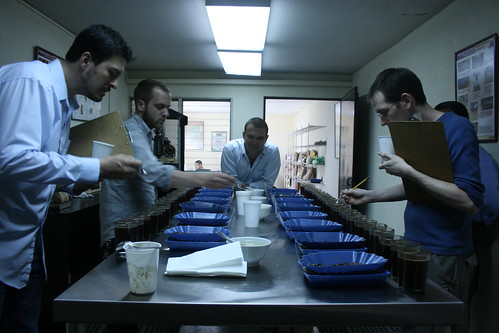
A lot of cuppingI can't think of a better place than Guatemala for this because of the range in micro climate, consistently high elevation, and clean production methods. For all the great coffees in Guatemala, they suffer one problem. The obsession with profile. Way too many people we met were focused on what the profiles should be when our simple goal was to identify the cleanest, sweetest, most aromatic and distinct. There are plenty of classic mineral acidity Guatemalan coffees though there are also so many more profiles that get blended away or devalued for lack of demand that are coffees I would pay money to have kept separate.

Posh labsAfter tables and tables of coffees, and having lots broken down smaller and smaller, we found coffees we were excited about. I had to leave one behind but found an exceptional aromatic coffee with a floral rose tea like character and another that can only be described as sickly sweet, juicy, and strong aromatics and yet both from the same area. In the end, we are likely to have 5 Guatemalan coffees of which none are really similar.

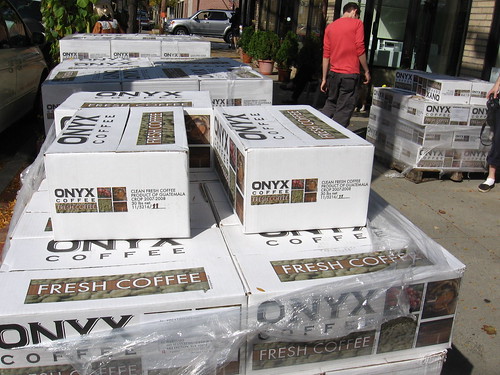
The final bit which was contingent on getting the floral stuff was getting the packaging done. We were hesitant to believe this would happen but after a lot of footwork by Edwin and a bit of luck, we got the sealing together at the last minute. Multiple box designs and time spent testing led to some solid results. They ended up with 19lb vacuum sealed bags in custom cardboard boxes. These are the first coffees exported from Guatemala that are in something other than jute. To which Anacafe gets a big thanks for allowing this to happen and supporting the desire to do this. The result of these efforts is that there is now a way to get vac sealed coffees out of Guatemala be it Cup of Excellence or just something you want to protect.

Work hard to create a demand, do the footwork, and put your money where your mouth is. It may work out or it may not but you have to play it out. I'm happy with how it turned out and I can't wait until the coffees get here. I am already looking at farms to visit, new brokers willing to host, and getting in deeper next year by returning with a larger group of buyers.

Saturday, March 15, 2008

Guatemalan coffees

The last week has been spent in Guatemala. Both Kaminsky and I left last week and he is still there, probably headed up to Huehuetenango as I write this. When you detach from this online community and spend a little time chasing some good coffees, you begin to sort through a lot of things that were never really apparent before. The realities of production and the simple fact that due to language or otherwise, most exporters or mills are just beginning to have some awareness of what people like us are interested in.

For me, there are two producing origins that consistently produce top notch coffees, Kenya and Guatemala. The variation in exceptional regional coffees in Guatemala further reinforces this. I found myself being exposed to many different profiles from each region and variations within each that are quite unique. At times, you could take large representative lots and simply split them to find exceptional coffees therein.

Sometimes.

You could literally spend weeks looking for good coffees from each region and there would be much exceptional variance within each to differentiate.

Huehuetenango - This remote mountain region produces some fantastic coffees but it also seems to produce them wildly inconsistently. Part of this may be because the region is so highly prized, many coffees are apparently bought sight unseen but another part is that invariably in this remote region, most producers are apt to process their own coffees. My impression of what Huehue coffees were supposed to be had been largely built on Vista Hermosa and El Injerto. This is possibly an unfair representation as what few chances we had to cup Huehues yielded some wild cups and only one we were excited about.

Atitlan - This region struck us as interesting on each and every cupping table we came across. A balance of delightful florals and mid tone fruits seemed to mark the coffees we came across this year. Lower acidity in general but more marked aromas came across well to our cupping group. The cleanest cups seemed to come from this region which may simply be a fact that it is largely overlooked next to the more highly prized name brands or it could have been the weather!

Fraijanes - This coffee presented us with an interesting set of descriptors. In some cases, it was like eating ripe apples, at other times slightly over ripe fruits. The variance of snappy acidity was apparent but it yielded intriguing cups that if cleaned up at the sorting phase or more attention during the washed process, it could be a very good cup worth chasing. The aromas were subtle and balanced in most cups.

Coban - I never met a Coban I liked. These coffees are a cleaner and fresher version of a Sumatran. The wild fruit and musty notes are a product of the lower elevation and the high humidity in the region.

Las Lapas/ New Oriente - These coffees were dominated by the presence of some very unique and interesting fruits that bordered on an intensity that ran the line of our tolerance for a 'fruity' or 'winey' notes dominated these cups.

Acatenango - This region is close to Antigua and was newly developed to separate it's product from that of Antigua in terms of branding. This coffee has a soft fruit profile described as peach and pear with subtle aromas. Since it's a late harvest, we only cupped a few which were not exciting.

Antigua - This bluish green bean is often considered a premium and therefore demands a higher price than many exceptional coffees. The profile is often coveted by many including the Japanese. Balanced acidity and aroma are common descriptions. I only cupped a few Antiguas and they simply were not why we went to Guatemala. These are also a late harvest coffee.

San Marcos - These volcanic coffees have a note as one of the most defined coffees I cupped came from this region and yet a multitude of wilder cups also came from this region. A high amount of rainfall in the area makes the drying phase critical and this seemed a problem with many coffees we cupped during our trip. The one great cup was part of a large lot that had been broken down to mill days to yield what I thought was a very unique coffee. Defined ripe fruits with a sweet finish but it was disappointing that the best lots seemed mixed into large untraceable lots.

What many may not realize is that there is relatively little low grown coffee in Guatemala. The soil types and quality of productions vary while the multitude of micro climates lend a huge variation in the coffees. This leaves me wondering what the future holds if we dig even deeper and persist in searching for lots of coffees with high expressions. Add to that impeccable sorting and some progressive (non jute) packing and you have the script for good coffees in the future.

Wednesday, February 07, 2007

It's in the soil... and the climate

coffee tourists
When we first made the turn to the road leading to the farm, we were told by Edwin Sr., 'don't get your hopes up about the pavement.' He was right, of course. While the early few meters were all nicely paved and surrounded by trimmed trees, it quickly became more forested areas as we moved up where the roads were bumpy and provided a more raucous ride. Mind you, it's not jungle as our late arriving colleagues opined, that would be in the lowlands, it was forest with some evergreen and mixed in the occasional bamboo clump.

One of the things that struck me the most as we headed up the mountains to the farm was how different the lower lands were compared to the higher altitudes. As we journeyed the final leg of our expedition to the farm with a beautiful view, we passed several other farms on the way up. It was these farms at the lower altitudes that looked so different than what we would see higher up. It's hard to explain, but as we followed our bumpy road twisting up the mountains in our little bus, the vegetation began to change and so did the look of the coffee trees planted around us.

We stopped at several points and really began to get a feeling for just how high up we were and how truly massive the mountains are in Huehuetenango(pronounced wayway... not hueyhuey).

On the way to FVH

It was not until later, as brave explorer Tristen was taking GPS measurements with farm manager Carlos from different areas of the farm, that we got a better handle on what kind of variations lay on each lot. From 5000ft to 7000ft with new plantings pushing even higher. Needless to say, we were impressed by the altitude and are certain it warranted the rating Super Hard Bean.

The altitude of these mountains also spoke to another feature you may not notice unless you spent an early morning at the farm. I remember the first morning sitting on the porch watching the sun slowly creep over and down the mountain, filling some crevices and restraining from lighting others. It moved over bit by bit until creeping up the porch and onto my lap. I realized then that the side of the ridge behind us may not get any sun for at least an hour more and then it dawned on me how each part of this mountain could get very different rain and sun. All those steep crevices and ridges presented different shade and rainfall options. Just looking at some of the slopes made you wonder how anyone could harvest some of these coffees without tumbling down the mountain or sliding off in the mud every time it rains.

coffee trails

It is the soil on the mountains that seems a funny thing to me. It sparked more than a few memories of childhood traipsing through the corn fields or running in the mountains. I remember when growing up in the hills of Appalachia in Southwest Virginia where the soil was clay and stuck to your shoes in intolerable clods. Then there were areas of the mountains where it just was different for whatever reason and darker richer soil or rockier sandier soil would suddenly prevail. In these mountains of Huehue, some areas were more like clay while others were darker and richer in color lacking that reddish hue. In some areas, large chunks of volcanic rock were laying around to remind us of the region's tumultuous past. After trekking up and down those trails, I'm sure more than one of us came a bit too close to the soil while barreling down those paths though I was lucky enough to avoid ending up with a terroir encounter.

So if you ever wonder why some of us out there opine about the value of micro lots and smaller and smaller units for the coffee, it largely has to do with the land. There might be a great lot out there where some perfect set of soil and shade comes together with just the right amount of rain to produce some tiny bit of perfection. Or so I imagine, as I am still dreaming about sitting on that porch as the sun creeps down the mountain while I enjoy the beautiful view.

Monday, January 15, 2007

Super Hard Bean!

It's SHB. Super hard bean. Strictly Hard Bean. Strictly high grown dense beans... no matter what you will call it, they are the good stuff. The dense little buggers that wear grinders down quicker but pack a flavorful punch!

So what about hard beans?

I'm headed off to Guatemala in a week as part of Edwin and Aaron's barista trip. Edwin is leading some work on storage that Aaron and I are priveleged to help out on. Got a couple of blinds lined up to help out and it should be interesting stuff. I got a bag of green from Edwin to roast pre-trip and I need to sort out a lot of side things before going. This is going to be a busy week.
I will follow up on the experiment when Edwin sets us up with the green, Aaron may write an article if things go well.
Keep an eye on it. I am feeling the pressure, but I know that's just part of the growing phase for me in this business.
Looking forward to some Guatemala SHB... :p

Thursday, December 21, 2006

Edwin Martinez on fermentation: The critical point in processing


Photo Courtesy of Edwin Martinez


"The above picture remains in my opinion the start of what is ultimately the critical point for most estates in Guatemala, be it 1/4 of an acre or a few thousand acres. It is in my opinion quite an achievement in the development of coffee (particularly for a country that is so much smaller than Colombia or Brazil) to have such a high level of consistency and quality control exercised by all even the smallest growers who have less than 1/4 of an acre. The conflict with fermentation is that if one crosses the line and goes too far, the coffee is ruined as “over fermentation” is in fact the worst and most identifiable defect." -Edwin Martinez
Read the full discussion here

Edwin's recent post on fermentation gives great insight into this process and his undeniable commitment to quality while his recent gutsy post on the professionals only coffee forum coffeed.com showed his intense commitment and dedication to the betterment of his community.

Fermentation is a touchy subject, but it really needs to be addressed and people really need be made aware of just how much labor, skill, water quality issues, and costs are associated with a good washed process coffee when compared with traditional naturals.

Edwin adds, "These topics aren’t for those who want to look over and see what the next guy is doing rather (it's) for those who want to define the cutting edge and are willing to go out on a limb risking falling on (their) face in the genuine pursuit of excellence." We agree, and believe those are the topics we want to cover and see others cover in the future but are very curious who the rookies are that Edwin speaks of!

A whole-hearted Barismo.com crew endorsement of Edwin "commit to excellence and quality with out compromise" Martinez as he is quickly rising the ladder to the top of our coffee champions list.

Saturday, December 09, 2006

Finca Vista Hermosa via Brown Coffee Co


"The lot that Aaron (Brown Coffee Co.) has I believe is from El Eden which means Eden. I think it was my aunt Delmi that gave this parcel it's name after the Garden of Eden in the Bible because it has two springs on it that yield 2 creeks that end up merging and it reminded her of the Tigris and Euphrates river in the middle east that is supposedly where the garden of Eden was. It is very very steep, but has great trees (non coffee) and of course the water and great partial exposure as it is it's own mini ridge...
This was 1 of 3 lots that Anacafe Awarded (the Martinez Family) earlier this year granting (them) the lock on this years supply to Ancafe for what they use to promote the region of Huehue with around the world at trade shows and such." - Edwin Martinez of Finca Vista Hermosa


When we first cupped this coffee, we were largely interested in why it was so even and how it was so clean. It seemed that for this price, this coffee was a heck of a steal. It was so evenly sorted and so few visible defects that we couldn't believe the price. When I got the low down from Edwin, the quality we were seeing made sense. The coffee is solid because it comes from an area with potentially good terroir and they must take care of it in processing.

We cupped this coffee and got a satisfying experience. It was clean and sweet, the roast smoothed out and the cup clarified as it began to cool.

The cupping notes yielded a light layer of roast cocoa, mineral notes, dark sugar, and clean fruit toned acidity underneath. The coffee could go lighter because of it's quality, but I would not enjoy darker. The roast was part of the flavor balance and did not overwhelm the origin flavors allowing them to show through.

Making a snap judgement on this coffee was hard, but it really seemed I preferred the clarity of filter over french press in this case. The 'El Eden' was very representative of what I have come to associate with the good flavor characters of the Huehuetenango region of Guatemala and I will probably sample it again in the future.

Monday, November 13, 2006

What's the deal with Injerto?

We at Barismo are trying to wrap our heads around the sales of this CoE winner and one of the ten most expensive coffees in the world...
The premium lot of Guatemala Finca El Injerto, Bourbon Reserva (Cup of Excellence #1 lot) that went for $25.10/lb at the CoE guatemala auctions is creeping out for sale. Forbes predicted it would reach $50/lb or more retail.

Let's do the numbers...
Sweet marias is turning over the green for sale unroasted at $29.90/lb

Stumptown is selling it roasted at $36.25/lb

Terroir is selling it at $49.95/12oz


*Note: Terroir is holding limited roasts only on holidays and will offer the lot as a vintage in the next few years. Achievable only because of George's green freezing system...
No updates from Robert Thoreson at Kaffa or 49th parallel on what they may charge for the same lot.

Is Stumptown underpricing? Are they making money on this once shipping and all costs are included? Would you as a home roaster take the risk at burning a few roasts to get it right? Is Terroir overpricing or creating demand by restricting supply? Long after the last lot of Injerto is sold elsewhere, Terroir wll still be selling it for special release...