company - education - coffee
Showing posts with label espresso. Show all posts

Friday, November 18, 2011

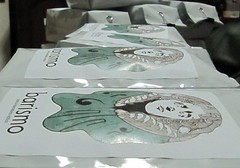
New limited run espresso: Reanimator and Linnaean St.


The current espresso project is a lively and juicy shot with very interesting aromatics.  This lighter brighter espresso is an impressive match of three very different coffees. It's made up of Guatemala El Bosque, Colombia Matambo, and Colombia San Sebastian.  Sebastian is the base with an extremely clean and sweet profile topped with a light pear aroma.  Bosque and Nazareth intermingle adding both a deep berry punch to the cup but also a strong aromatic citrus component.

The other current project is the return of Linnaean St. espresso blend.  It's a classic in our lineup that many of our early supporters still talk about.  We are even going to do a bit of a throwback label to do it justice.  This blend is light, bright, and aromatic.  When rested properly, the pairing of Kenya Othaya, Guatemala El Bosque, and Colombia San Sebastian are very expressive.  Much like the old 'L Street' blend, this has very nice aromatics and goes for a fruit punch feel.  Given that Simon's (which is coming up on 10 years as a cafe) was the inspiration for this blend, it's also going to double as a celebration blend of sorts.

We are offering both on the website as a package until Christmas.  

Tuesday, November 08, 2011

Espresso Series

We have very few constants in our espresso lineup as we switch components based on what's seasonably available.  The one profile that hangs around is the Clockwork espresso.  This will be a blend of coffees for a consistent profile even as the components may change seasonally.   Look at the component list and percentage ratio for each change and there is also a subtle version number on each label for major changes.  We based the original artwork for that espresso on Clockwork before the Clock.

CLOCKWORK
Pictured: 'Clockwork' original print by Tim Borrego


Soma EspressoSoon to return will be our Soma espresso which uses our most expressive coffees for a stellar and uniquely balanced but still complex espresso.  The Soma has been a standard of our lineup for a long time and it's been missed.

Aside from those two concept espresso, we have the ever changing 'Wabi Sabi' series.  These change constantly and are often special experiences of coffees paired for unique flavors.  With the Wabi espresso, it's about changing it up and offering a new look as different estate combinations become available.

Friday, November 04, 2011

Espresso philosophy

'What if you took a wine approach to blending? Two or three high grade varietals blended together for something even more complex. Instead of putting together inferior parts, use components that were great as separate pieces.'   From a 2006 barismo blog excerpt.

Our espresso philosophy since the beginning (even before we roasted) was that transparency matters.  Knowing is identity and that's a big part of our philosophy.  We tell you everything that's in each espresso down to the percentage.  Limiting the amount of coffees blended to mostly pairs and using more expressive coffees has been a big part of our program.  The following is an excerpt from one of our espresso back labels that states it best:


The Case for Transparency in Espresso Labels
Ingredients are where quality starts. What goes into an espresso is the preface to quality of roast, freshness of brew, or all of that fancy gear. Knowing what components build an espresso is the most powerful variable in that it develops a sense of awareness for your own personal preferences to the specific ingredients. Knowing what you like and do not like is easier when the components are listed on the bags. Having a sense of what those farms or origins taste like together retains some identity of the unique components. Identity is important for farms when leveraging better prices paid for coffees.
Historically, roasters have created espresso blends by mixing in agey or past crop coffees, lower grade coffees, and softer or low grown coffees. Knowing the contents is a powerful instrument in judging the value of an espresso. Some roasters are reluctant to give up prized recipes for their espresso blends, but the more progressive roasters should be proud of their components and those unique ingredients.

Monday, October 31, 2011

Some of our favorite espresso pairings of the past

Aside from long list of coffees we have roasted as single estate espresso, we've had quite a bit of fun creating some unique pairings.  Here's a top 5 of the ones I miss with a little info on the name schemes and if we might bring them back for a return appearance.

1. The first really fun espresso we did was Linnaean St. Espresso.   This was a project specifically over at Simon's (1736 Mass Ave) but it took on a life of it's own for a little while.  The idea was paying homage to a Cambridge coffee shop institution.  It's been a long time since we've had a coffee from Brasil so rebuilding this Brasil/Costa Rica/Kenya profile would be unlikely.  I'd love to do a run of something similar around the Holidays, maybe call it our Christmas only espresso.   We might even bring back the vintage label style for that... maybe not.

2. Doppelganger espresso was just us having a ton of fun.  There were several versions of this but the idea was take two amazing Kenyan coffees and turn them into a challenging espresso.  Doppelganger was a clever one because the pairings were often 1:1 lending the name some humor.  We still get people asking when we are going to do another run of this and we are thinking about it but found Ruthangati to be too strong to be paired with Othaya.

3. SOMA espresso was our flagship espresso for a long time.  There have been three iterations but the idea was pairing up the best of Zone10 and  Doppelganger by pairing two Guatemalan coffees with a Kenyan coffee.  The name was a misleading one intentionally for all the things it could mean (and probably doesn't) but we are planning on bringing it back very soon.

4. Zone 10 was a personal favorite and had a huge following among our regulars.  People still ask about this coffee though it's been off the shelf for some time.  The name came from Zona Viva (Zone 10) in Guatemala City, Guatemala.  Zone 10 is a bit of a tourist and restaurant/club area but also an area where many coffee brokers ply their trade.   Zone 10 was a pairing of our best Guatemalan coffees offered as espresso and we'll bring it back in month.

5.  Homunculus Espresso was a pairing of two Ethiopia coffees along the lines of Doppelganger naming schemes, this blend had a very specific intent inspired.  By pairing 30 percent of a washed Sidamo with 70 percent of a washed Yirgacheffe, the deep floral of the Yirgacheffe was dominated by the smaller portion of Sidamo.  The Sidamo in effect was running the show even though it was a smaller component.  We'd love to bring it back but maybe next year.

Honorable mention:  The Villain Espresso was one of those pairings that got out of hand.  It was hugely successful in spite of it being one that was not uniformly loved among the staff.  A Brasil with an El Salvador intended to be traditional and a bit boring, it was heavy bodied and milk chocolate in the best way. We may or may not find a way to bring this back but the name was tongue in cheek being contrary to what we had done before.

Thursday, September 01, 2011

Reposo Espresso!


Reposo is another stellar addition to our Wabi series of espresso.  A simple pairing with elegant results within the same origin but from different estates.  We chose to match 30% Don Mayo Mt. Canet and 70% Rio Jorco Los Lobos. (Please read our travel logs from our spring visit to these estates).
We tested this offering in a few high end cafes and got really positive feedback so we are releasing it online as well.
This is a sugary cup of maple, almonds, tangerines, and complex red fruits.  It has a wide range of specs where it pulls well but we recommend it for straight shots only.  Grab a bag online in our new shop.

Thursday, February 11, 2010

Doppleganger espresso

We were playing with shots of the new Wabi series today, Doppleganger.

Shots were coming out taffy cherry with a raspberry nose. It was not a 'fruit bomb' so acidhounds will be disappointed. The fruit comes more taffy than tart, notably better as you let the coffees rest and clarify. We recommend this for a day 7-12 off of roast window. Any earlier and it can be a little unruly with the fruit.

This will hang around for a couple of weeks and then we`ll move on to some new coffees. We have a couple of new arrivals to talk about soon, more on those later.

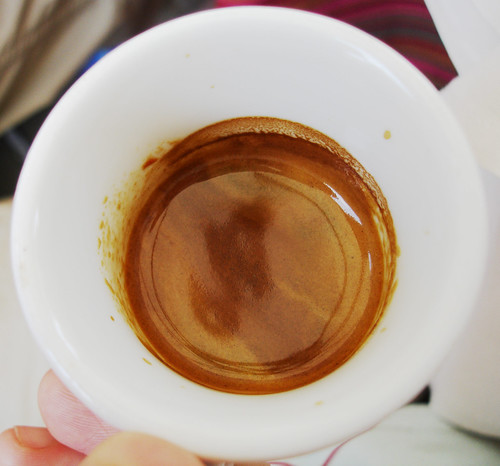
The crema on this pairing is very persistent but also a little lighter in coloration. With the blend contents, that makes sense but should be noted. I thought it better to post it as is, having been openly critical of other roasters using color corrected photos on their bags or in marketing materials.

Tuesday, January 26, 2010

Adjusting the grind

Our approach to espresso is the same as our approach to manual methods. It involves eliminating (by controlling or making fixed) the majority of variables. Our approach to espresso has been to work from a point of the ideal situations for time, temperature, volume, and dose backwards. Once we find the sweet spot in an espresso, it becomes a formula of adjusting the grind to account for environmental or outside factors.

So, we use our ideal settings for dose, time, and temp as rather fixed and then tune the grind to adjust volume as needed.

The same approach is taken with Syphon as it is with all hand pour methods we work with. Find an ideal set of parameters and work backwards. Determine an ideal temperature relative to dose, timing, and volume.

For our Syphon methods, grind is easy to adjust. Once you choose a dose, temp, and brew volume relative to a specific time. In this instance, we choose the draw down time as the coffee comes from the top to the bottom globe. We treat it as a fixed value which for our method, relative to our specific dose and time, which is 30 seconds. Change the brew time or dose significantly and this value of 30 seconds becomes a bit arbitrary, needing a recalibration.

For v60 and other free pour methods like the Cloth Flannel Woodneck, grind is not alone in affecting the brew volume. The pour rate has a large effect.

For beginners to v60, we recommend using a scale underneath to measure pour rates. Rather than using it for resulting brew volumes, we use it as a measure to know for certain we have (for example) poured 6 ounces in the first minute. Knowing the rate of pour is a good way to pin that down as a variable and then adjust the grind.

In the same way as we do the Syphon, we choose the last 30 seconds for draw down in the one cup method as a point for grind calibration. If we stop pouring at 30 seconds and the last drips flow through before the time is up, the grind is too coarse. If there is substantial water left, the grind is too fine.

This is, of course, subjective to dose and whether the pour itself created an even dispersion of grinds in the filter bed.

The summary being, we attempt to hold all variables firm to the only one that is most effective in compensating for environmental variables, the grind. The grind has an effect on flow and resulting brew volume so the key is constantly adjusting the brew volume back towards ideal throughout the day with a fixed dose, time, and temp.

Wednesday, April 15, 2009

Espresso pack

We have a new espresso blend, SOMA, which though we are about to run out of some of it's components in the next month as new crops arrive, it's pretty darn good. I think that after all the time we have spent with these coffees, at a certain point we understood them well enough to know the pontential in these coffees as a roaster. There are few things we haven't tried to get more out of these coffees and this blend is a culmination of these lessons.

The blend consists of 10% Nimac Kapeh, 15% Kiandu, and 75% Cardenas. That's two Guatemala Atitlans and a Kenya Nyeri.

Sweetness, viscous mouthfeel, and ripe fruit dominate the cup character. Balance from top to bottom makes this smooth blend less challenging but still overtly complex. Front of the mouth cask conditioned red wine yields mid palate to soft cocoa, then finishes with sweet lingering spiced fruit jam.

It's a thick dark red shot that pulls well as a 19 gram double @ 201.5f and at shorter volumes.

During the WBC we are offering an espresso pack where you can pick up our three current blends at a reasonable price.

Thursday, February 12, 2009

About a label

This is not the first version of our labels and it won't be the last. Currently though, our main goal is to have a label that is simple and transparent.


The origin takes a secondary place to the farm name/blend name but is still noted. Below, you have some simple color coded info on the processing and other identifiers about the coffee such as region or coop. We have been emphatic about transparency for blends and are adamant about percentages on the bags. We are glad to see other roasters taking the same tact in the US market. We have not put certifications such as Fair Trade or Organic on the relevant bags for many reasons.

At the recent NERBC, I was confounded by a company rep pitching a Kenya that was sourced through 'the second window'. I was a bit confused because it almost sounded like he was pitching it as a recent coffee but that 'second window' hasn't appeared yet for this harvest so the Kenya had to be approaching a full year off harvest and I guarantee it wasn't vacuum sealed so add jute bagged to the equation. It reminded me vintage is relevant and we need to rethink noting which coffees are sealed at origin because past crop has a different meaning if the coffee was in jute as opposed to sealed.

Anyway, we have blocked off a small section of the bag for brewing instructions. In most cases, this is just a suggested guideline to help consumers out. You would be surprised how simply having 27 seconds on the bag can induce many customers to ask, 'How do I get the shot to 27 seconds?' That's an incredibly powerful moment where many doors open that lead to better coffee at home. Most machines don't have solid temperature controls but it helps to have a ballpark target to offset around so we included specific brew temps and also dose.

While not every consumer will have the equipment to follow the specs, we felt generic specs were a bad idea. On Poker face, the specs are pretty much what Nik uses at Taste, for Linnaean St. it's the specs Simon uses. You can probably pull those coffees a dozen ways but I always think of a consumer walking into a cafe or tasting, having a shot, then getting frustrated about not being able to repeat it at home. Believe me, I was there many a time. Having the specs helps and I have a lot of emails from home espresso enthusiasts where the discussions have gone from getting a new grinder to flushing routines and dosing technique. All of which is good discussion to have if they want to come close to the cafe experience.

Saturday, December 20, 2008

Round 10

I had a solid shot of PF at Taste in the AM, headed back to the shop after a brief stop at Simon's to drop off some Nimac Kapeh.

It was one of those days where I decided, again, I needed a hammock at the shop.

Then the snow came.

I ended up calling it a day and wanted to try to get some rest because it's been a long week. A lot of long hours to get roasts out ahead of Christmas. That means a few long days but in the end, so be it. We didn't get into coffee to be romantics, we knew it was work.

Retail sales have been solid but we do have a little extra espresso at the shop this week. If nobody braves the snow to get them, we'll just drink it ourselves. That reminds me, we are working on two new espresso projects.

One project is to rebuild Rudiments. Our initial vision is a roast of 70% Brasil and 30% Guatemala Atitlan, Nimac Kapeh. We finally found the espresso profile for Nimac and it's a hell of a straight shot. I wish some shop would just pick thtat coffee up and serve it as both house espresso and drip. But then... The idea for Rudiments is to be almost a classic North Italian profile done to our tastes. The Brasil is the base and the Nimac is the 'Yirg' profile that sweetens and adds aroma. In barismo fashion, it's clean, but this would be very mellow fruit compared to some of our other versions of Rudiments.

The final espresso is a work in progress called Soma. I am still trying to finesse a third component so it probably won't be finished until post Christmas. More on that later.

Wednesday, December 03, 2008

Espresso Notes: Poker Face and the Espressothon

Saturday, the 13th of December will be Espressothon at Taste in Newton. All day at Taste, there will be two espresso offered up. Noteworthy in that it will be the only place in town you can get both our L. St. and the new blend Poker Face pulled on a Synesso on the same bar. Mark your calendar.

Poker Face is a creation I came up with in cooperation with Nik Krankl, owner of Taste and a serious poker player. Nik was an avid poker player and a published author for Magazines like All In until his new coffee career began. It was from this influence that the name Poker Face came about for this blend. A mix of two vacuum packed coffees, our Kiandu(20%) and our Cardenas (80%).

In one way, it was a throw back to his father's success in the wine industry. An acknowledgment of his father's influence and deference to an exceptional wine his father created, of the same name. Much like the Syrah, this espresso has notes of berries, vanilla, and fruit but with a creamy texture and excellent mouth feel. Looking back before you go forward is something we respect a lot in our choosing names for blends and this is no exception.

Nik now takes this name a bit more literally. As a former barista myself, I understand how difficult it can be to read the espresso drinker. They rarely come out and literally say what they felt. Instead they hold it tight and keep a 'poker face' in regards to their emotions about what they just imbibed.

I have known Nik for a few years now. I can say I knew him when he had aspirations to open a shop across the river. Now he is the owner of a shop in Newton that in time will be the new destination for espresso enthusiasts in our area.

That reminds me that if you live in NY and don't feel like a day trip for espresso, Grumpies will have a version of this on guest through the weekend.

Saturday, November 22, 2008

The utility blend

I never believed as a barista that you could really have a great espresso that was good as a shot and in copious amounts of milk. To expect this feeling to change when I started roasting would be a bit presumptuous.

At one point or another, I have worked with many different espresso blends. There were those that made good shots, others made acceptable shots and good short milk drinks, still others only seemed geared at cutting through a 16oz latte.

It has been my feeling that espresso should be purposeful not utilitarian. Roast for purpose. If we are roasting our estate coffees and refining them each for specific brew methods, why wouldn't the same apply for espresso?

To that end, the L St. is a straight shot. It never occurred to me to work with it in milk. The current version is coming out really nice as a straight shot but all the complexity and sweetness is lost in a lot of milk. It just isn't tested in milk and I wouldn't take offense if someone didn't like it in milk.

We have done more milk geared espresso before. Rudiments being one, which also briefly doubled as 'You're beautiful'. It's just a matter of a good match.

The reason this is worth posting is not a defense or even about an explanation. It occurs to me that all too often we approach coffee from the lowest common denominator. We, the professionals, ask ourselves how it will taste in milk with sugar instead of simply asking ourselves, does it taste good. Well, does it?

Maybe the reason people put condiments in coffee is habitual. Maybe, though, it is because so many coffees are served with the thought that it will have condiments added to it. I guess if we focus on 16oz lattes that the espresso can cut through, the cappuccinos may be a bit rough or the straight shot a bit too strong. I think as a roaster and former barista, the truth is you can only focus on one portion of the coffee drinking market segment, so choose carefully. Trying to beat Dunkin or Sbux at their own game is a bit foolish when there are so many progressive shops moving into the market that do something completely different and are making bank. Something for the pros to chew on.

Happy Thanksgiving.

It's cold. We will be closed during the holiday and reopen Saturday.

Thursday, November 20, 2008

The barismo ristretto

Let me first clear something up. A ristretto means a restricted shot. That by definition means you shorten the flow for the espresso in the same time range as a normal shot. It does not mean you start pulling 20 second shots (that would be underextraction a la Sbucks method) and cutting the shot early by time, you actually have to change the grind and make adjustments to get the volume shortened in a normal extraction time. The dose is often heavier and the roast is often a bit darker but it does not imply shorter time.

We have been working on a new offering since the Cardenas arrived. It's interesting as we have been trying to come up with a more ristretto style shot. Now don't get me wrong, it still falls into our clean flavor profile but it has the deep viscosity and syrupy texture you desire without getting into the smoker's palate notes of tobacco and spice. The acidity is muted but the origin characters remain, a feat in and of itself. It even has the flecking and deep red visual cues with out the color corrected photo's help. The dominant notes of our blend right now are berries, vanilla, and brown sugar leading into cocoa. Some interesting aromas come into play but you gotta pull this tight. It is our best NY style espresso (very tight shot) attempt to date but done to a barismo taste profile (clean).

It pulls as an 18g double ristretto or a down dosed triple ristretto. Sorta Ecco style for the savy barista's out there. Tight and thick yields a soft texture and creamy profile. I had an 18g double this morning @ 201.5F just under an ounce that really was exciting.

While the L. Street pulls best around 198f 16g ~2oz right now, this new blend is the apple to that orange. Different, but both are special.

The new blend doesn't have a name yet (I guarantee it won't be something vaguely Italian sounding) but should be on the shelf at the roasterie and in a select cafe we will promote sometime next week.

Sunday, September 21, 2008

Linnaean St. Espresso

We have been playing around with multiple names for the espresso blends lately. Our stock blend though it has changed was called (Ben K.'s idea), Rudiments. Honestly, we really want to call it elements but we aren't sure how the guys at Supreme are going to play that theme out and don't want to sound overtly similar. Rudiments is the essential basic blend barismo style. Since it is not set, we will come back to it later.

What I decided on with much harumphing from the group is that I want to name the one blend right now that is completely set something personal. We were calling the blend that was 25% CR Las Lajas miel, 10% Kenya Ichimara pb, 65% Brasil Morenihna Formosa screen dried, our 'Barista's Pick.' It's a simple blend highlighted by maple red apple notes mid palate and it just works really well. After playing with a few points on the acidity and mid tone, we settled on one line and percentages. I am changing the name to reflect a static blend called Linnaean St. Espresso even though I am sure there will be mispronunciations because the nonlocals give it a little more effort on the first 'a'.

When I first moved to Cambridge, we lived in a cramped Studio on Gray St. off Linnaean in Cambridge. It was also a block from where I cut my teeth as a barista. Taking a shop from Hazelnut coffee, nameless dark blends in jumbo cups, dull grinders, scalded milk, and ancient equipment with bad training to Estate Coffees and a decent reputation for espresso. That was a long time ago and many battles were fought that I don't care to recount but I will always have an affinity for the people I met, the relationships made, and the support they gave me.

I am now detached from the shop and doing my own thing but I don't forget the uniqueness of that area community. The willingness of the people I met to get personally invested or simply interested still impresses me even today. I grew so much so quickly with the confidence that people believed in us and the directions we were moving. In few other places could I have flourished the way I did. For that being said, the area has a lot of familiar faces and a personal attachment still.

Wednesday, September 10, 2008

barismo: Upcoming events


Based on the requests by those who missed out on a visit at the open house, we will split up and do a few follow up events so everyone can have a chance to have the same experience. Repeats welcome, new faces appreciated.

Other upcoming chances to sample coffees:
A Syphon demo at the shop hosted by Ben Chen.
Saturday Sept. 13th from 2-4pm

A few rounds of cupping hosted by Ben Kaminsky.
Thursday Sept. 18th from 6-8pm

A round of different style espressos presented by Chris van Schyndel.
Saturday Sept. 20th From 2-4pm

No RSVP, free to the public.
[where: 169 Mass Ave Arlington, MA 02474]

Friday, February 01, 2008

If shots could talk...

This lineup would be a chorus.

I did a quick trial of the coffees for the espresso event and wow. I mean, I am not the guy who professes love and romance over the cup often but this was wow. Even the straight shot brazil was simply fantastic. I am so happy and maybe after all the intense work and suffering this week, the shots are that much more worth it.

We will run out of these coffees quick at the espresso event because they are simply fantastic. Though I was skeptical of the blends, they were amazing pairings. The Yirg blend pairing is so sweet and just jammy fruit with pleasant wine notes(lacks the tannins and sharp acidity though) and lavender aroma. I thought it would be a challenge to pull but they just lined up because they were all roasted for the same brew range... The Esmeralda was a monster of aroma that could even be felt in the aftertaste like drinking honeysuckle... Thankfully, there is a lot of the Brazil Moreninha Formosa so go nuts people, have a shot!

Monday, December 03, 2007

Espresso: The delay timer hack

We go through a lot of nonsense for a good espresso. Sometimes I wonder if it's worth it... sometimes.

photo originally uploaded by hazelsheard.

Simon's Coffee Shop has been working with a delay timer on the machine for the last few weeks. The basic setup involves a flow regulator and an adjustable delay timer that controls when the rotary pump kicks in.

The idea is that you use the flow regulator to control line pressure during a 'pre-infusion' where the pump does not kick in yet. To set it up, you adjust your line pressure to get your first drip at a desired time.

Let's say in this case, 5 seconds. Then you setup your timer to kick in at that same 5 second mark and your pstat will swing up to 9 bars at that point from your line pressure of say, 4 bars. This involves a lot of grind tweaking and adjustment during the early stages and graphing it would be weird so don't ask.

You then go through a series of adjustments testing from 3 seconds on up to 10 seconds to find the right balance for your espresso(assuming a fixed dose/extraction volume... at least temporarily). It helps to have an ideal batch of roasts lying around or work with it over a week or two instead of trying to coffee out and fix it in one night.

The original idea we had was that we could imitate the Synesso's style of pre-infusion where the pump kicks in at your manual control. Often overlooked on a Synesso, you can soak the puck with line pressure by moving the paddle to the middle position and then let pump pressure start when the paddle is moved to the full on position. The delay timer/flow regulator setup is meant to imitate this in an automated manner.

It's a hack. Don't get me wrong, I don't profess anyone should install this setup on their machine unless they know what they are getting into. For the price though, it gives you an almost lab style setup to make adjustments and we should credit whoever we originally took the idea from but I can't remember who we stole it from. Of course, a local tea guy is now treating it like the greatest thing since sliced bread and intends to push this as a solution to consistency(user/roaster) ills involving espresso at a small profit, of course. He thinks it will take out the variation in espresso.

It's not a cure all and in all honesty, if the roast has wild variations, homogenizing the brew method is only hack compensating. If people don't have the fundamentals in preparing espresso and clean grinders with new blades, none of this is worth even debating. That said, everything in espresso starts with the roast. In Simon's case, he is using a prolonged(close to 9 seconds) pre-infusion to build mid tones and smooth a roast that had very little mid tone on the cupping table. He's also using a low brew temp to mellow sharp acidity into something more approachable to the general espresso drinker's palate.

Simon isn't trying to reinvent espresso or try to force a new perspective on espresso that everyone else 'should follow.' The result is a very approachable but not super complex espresso that fits his personal palate. While roasted for high tones and lemon acidity, this Brasil comes out mellow, clean, and smooth nuttiness with hints of cocoa after all the tweaks. I think that's a great thing when the espresso matches up to the owners personal palate very well.

I find it educational and a lot of fun to muck around with experiments like this. Realisticaly, a newer machine likely would negate the need for such modifications. A Synesso, FB series LM, or GB5 completely negates this setup since the pre-infusion is built in already. Most heat exchangers have a mechanical preinfusion built in and won't work with this either but a machine like older LM Lineas could be modded with this setup just for curiosities.


UPDATE:
A few more changes since and the shots for Simon are now a very low line pressure with a 7 second timer delay at 196F 17g. If I implied that you absolutely had to sync first drip with pressure kicking in, you don't.

Tuesday, June 19, 2007

Espresso: Time vs Volume

I wanted to discuss prefinsuion but I think a stepping stone in working up to that topic is to address time vs volume and one methodology I use in evaluating espresso.

I have made a lot of empirical observations in espresso, troublesome finicky espresso at that, which have led me to value timing over volume. If I had not been using such an 'all or nothing' espresso, I might have a different perspective so don't take this as gospel but rather a set of observations to be tested on your own.

When dialing in an espresso, I often would establish a dose, volume, and time, sometimes new temp for the blend. In essence, I would set all the variables down to timing and leave volume as the last variable which I would control by adjusting the grind. This means, the timing of the shot would be set. This somewhat contradicts a lot of people out there so let me explain.

I noticed shots at the 'ideal volume' and and 'ideal time', let's say 28 seconds, were good. If at the same volume but plus or minus 3 seconds, the shot quality deteriorated immensely.

Conversely, shots that hit that 28 second extraction time but had a plus or minus of .25 ounce change in volume from the 'ideal volume' were actually quite drinkable. In fact, they were either a bit more intense or a bit thin but not as bad as the time variance shots.

Why volume is a tricky subject!

I surmised timing plays a very important role on extraction and was therefore more important as a perceived constant than volume. The problem is that most semi autos don't let you adjust the volume unless you go through a lot of trouble. This means that anyone using the semi autos would have a hard time adjusting for roast aging or variances in the cup while keeping the shot timing as a constant. They would have to rely on the flow meter or go for free pour thereby eliminating the need for a flow meter.

It occurs to us that a volumetric setup is indeed a problem on a machine. It is often the source of temperature fluctuations and is a relic of the super auto focus.

Why not put delay timers on machines that counted down from a certain time and killed the shot leaving you to adjust the volume as your only variable, constantly tweaking it towards your 'ideal volume'?

I propose for a volume cafe, everything on the machine should be set and programmed leaving your one external variable, the grind, to be tweaked.

Wednesday, June 13, 2007

Brian Quinn on the ristretto

"I think ristrettos can be very limiting, and in many instances, are often compensating for poor green quality. Or, put differently, ristrettos often compensate for darker roasts, which are often compensating for poor green quality.

A traditional double - by traditional, I mean ~1.75 ounces of liquid pulled in ~25 seconds - pulled from high quality, lightly roasted beans can offer incredible nuances that make ristrettos taste dull and flat in comparison. You can get higher-toned flavors and aromas of citrus, berries, and flowers that are just crushed by the overwhelming mid-tone flavors in ristretto pulls. You appreciate the sense of balance and range in the coffee as well - those higher notes playing against the more "typical" flavors of chocolate, nuts, and tobaccos in the coffee.

I made a point about green quality, because ristrettos can also smooth out defects or detracting notes in a coffee. You can take a funky, fermented Yirg or an overwhelmingly earthy Sumatran, and knock down those flavors by roasting dark. You can also knock them down by overdosing the basket and tightening the grind. That high note of wild strawberry funk, and that deep note of wood and earth get knocked down - because, in my opinion and experience, the ristretto pull tends to underextract the higher and lower notes in a coffee.

And some coffees, in my opinion - even high quality coffees - taste terrible when pulled as a ristretto. Terroir's Southern Italian (yes, I mean the darker roast) tastes like ash when I push the dose into the 18-21g range. At 16g, you get a nice mellow cup with some great flavors of pecans and hazlenuts, with some chocolate and citrus on the edges. And in no way does that cup lack in flavor or intensity. It's just different.

I'd also say that in my experience, darker roasts and tighter pulls are actually easier to do at home than the more traditional double. Paradoxically, I find ristrettos FAR more tolerant of distribution issues than lighter doses and lighter roasts.

When I first got into higher quality espresso, I used to really like ristrettos. Lately, I find them to be pretty boring. I don't know if you're into wine at all, but for me, ristrettos remind of the whole California cab craze 10-15 years ago. You had these wines coming out with incredible body and extraction - thick, inky, tongue-coating wines. And some of those wines were great, but many were really relying on extraction to make up for lackluster / boring fruit flavors. They turned my head at the time because of the mouthfeel, but as time went by, I started to really appreciate the incredible finesse and clarity that a great Bordeaux or Burgundian wine offers, or a top quality California Pinot Noir. The latter three wines, for me, are the best analogy for what a great traditional double offers.

So, no, I don't think ristrettos should be the default pour at all."
Brian on home-barista.com

Friday, June 08, 2007

Boston eXpresso

grinders


I have been thinking recently about how you don't see espresso that are meant to be enjoyed simply as espresso. A straight shot. Maybe a machiatto and maybe a traditional cappuccino.

You have a lot of either dark roasted or very earthy espresso that are designed to cut through milk leaving a less than desirable taste as a straight shot in most areas of the US.

Sure it's one of those things where business owners have to look at where the money is(big milk drinks), but I have always wondered about that. Seriously, the espresso out there is really quite wretched in most shops. Short of a complete revolution, how does that change?

I live in Cambridge and there are a handful of barista who can pour latte art at different shops. I can name on one hand the number of people who pull me consistently good shots, it's that small. Sure there is some latte art and fascination with the patterns, but truth is there are few really good shots to be had in this town.

This is where it gets weird though, at most every shop here in town you will get an espresso that brims over the top of the demitasse. It's not like these are small demis either, it's like trying to chug three and a half ounces of thin tasteless bilge water.

We call this the all too common Boston eXpresso.

Tosc's Expresso
I'm not sure this is an accident either. I typically hear:
A) It's to give you your money's worth by giving more volume(sure you get more volume but it tastes bad, so why bother) B) They think more volume will cut through the milk (a misconception as it simply doesn't) C) They were taught this by the roaster or were not trained at all by he roaster.

The part that bothers me it that it seems they are taught this way or are sold the coffee on some big up sell and then left to fend for themselves. It wouldn't be worth mention but there are some big time so called '3rd wave' roasters behind many of these local accounts that are paying top dollar to sell these coffees. Yet, I do not blame the cafes, I inclined to blame the roaster or companies who over hype their green quality, unrealistically romanticize the farmer, or simply talk about quality as if they are the absolute definition of the term. There are so many expectations that come with quality that I would think training should surely be one of them.

Then again, why pay for a great coffee if it falls flat on the cafe floor?

Really peaks your cynical nature doesn't it?