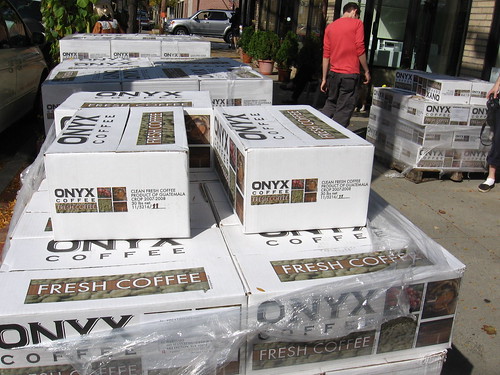
Our Guatemalan coffees finally arrived.
More to come later...

Showing posts with label guatemalan coffee. Show all posts
Showing posts with label guatemalan coffee. Show all posts
Wednesday, October 15, 2008
Sunday, July 13, 2008
The biggest known secret in town
I have gotten the requests for coffees via text messaging and email. When the Guatemalan coffees arrive at the end of this month, I will be sending out samples. I am a bit overextended right now trying to juggle several things so pardon the space in emails. With a little help from friends, the project is coming together as I write.
So about those Guatemalan coffees.
Earlier this year, we had an interesting venture organized in Guatemala. The idea was to identify three things: 1. Packaging 2. Sorting 3. Distribution
We wanted to know how to get the packing we wanted, the sorting we desired, at the earliest distribution point where we could still control these factors while having access to a large selection of traceable sources.
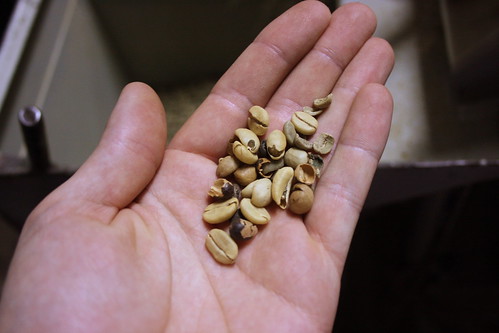 That was the idea but it quickly grew into something a bit more complicated. We became pitchmen working to get our brand access in venues which normally only deal in very large volumes. It was a tough sell but we found people willing to listen. Easiest of the three were our sorting requests. While brokers and exporters were either unsure or ambivalent about this request, it really resonated with the mill managers we met. Getting milling to better than a specialty Grade 1 sort with substantially less defects therein justifying us to call it a 'Grade Zero.' After about the third place we visited, we had a clearer idea of how distribution works, how receipts are tracked, who makes decisions, and what the demand is currently on the system. We came across the most interesting idea that sounds stupid simple. There are a lot of great coffees that go through channels we will never see. There are also so many exceptional coffees mixed in large blends that disappear, roasted into oblivion. We need to get at some of those coffees and that became a defining goal.
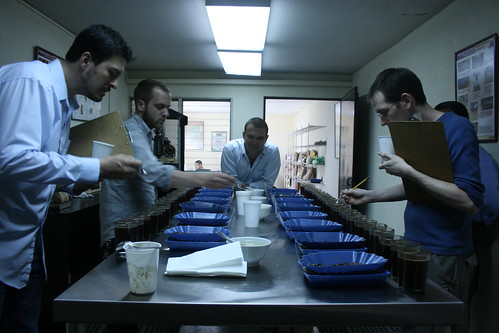 I can't think of a better place than Guatemala for this because of the range in micro climate, consistently high elevation, and clean production methods. For all the great coffees in Guatemala, they suffer one problem. The obsession with profile. Way too many people we met were focused on what the profiles should be when our simple goal was to identify the cleanest, sweetest, most aromatic and distinct. There are plenty of classic mineral acidity Guatemalan coffees though there are also so many more profiles that get blended away or devalued for lack of demand that are coffees I would pay money to have kept separate.
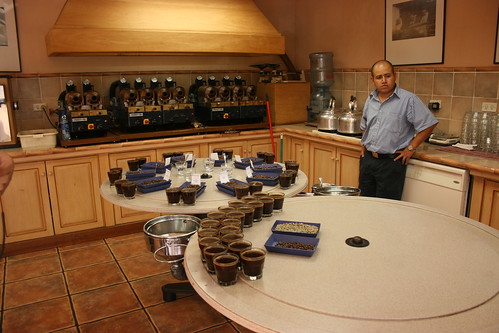 After tables and tables of coffees, and having lots broken down smaller and smaller, we found coffees we were excited about. I had to leave one behind but found an exceptional aromatic coffee with a floral rose tea like character and another that can only be described as sickly sweet, juicy, and strong aromatics and yet both from the same area. In the end, we are likely to have 5 Guatemalan coffees of which none are really similar.
The final bit which was contingent on getting the floral stuff was getting the packaging done. We were hesitant to believe this would happen but after a lot of footwork by Edwin and a bit of luck, we got the sealing together at the last minute. Multiple box designs and time spent testing led to some solid results. They ended up with 19lb vacuum sealed bags in custom cardboard boxes. These are the first coffees exported from Guatemala that are in something other than jute. To which Anacafe gets a big thanks for allowing this to happen and supporting the desire to do this. The result of these efforts is that there is now a way to get vac sealed coffees out of Guatemala be it Cup of Excellence or just something you want to protect.
Work hard to create a demand, do the footwork, and put your money where your mouth is. It may work out or it may not but you have to play it out. I'm happy with how it turned out and I can't wait until the coffees get here. I am already looking at farms to visit, new brokers willing to host, and getting in deeper next year by returning with a larger group of buyers.
So about those Guatemalan coffees.
Earlier this year, we had an interesting venture organized in Guatemala. The idea was to identify three things: 1. Packaging 2. Sorting 3. Distribution
We wanted to know how to get the packing we wanted, the sorting we desired, at the earliest distribution point where we could still control these factors while having access to a large selection of traceable sources.
That was the idea but it quickly grew into something a bit more complicated. We became pitchmen working to get our brand access in venues which normally only deal in very large volumes. It was a tough sell but we found people willing to listen. Easiest of the three were our sorting requests. While brokers and exporters were either unsure or ambivalent about this request, it really resonated with the mill managers we met. Getting milling to better than a specialty Grade 1 sort with substantially less defects therein justifying us to call it a 'Grade Zero.' After about the third place we visited, we had a clearer idea of how distribution works, how receipts are tracked, who makes decisions, and what the demand is currently on the system. We came across the most interesting idea that sounds stupid simple. There are a lot of great coffees that go through channels we will never see. There are also so many exceptional coffees mixed in large blends that disappear, roasted into oblivion. We need to get at some of those coffees and that became a defining goal.I can't think of a better place than Guatemala for this because of the range in micro climate, consistently high elevation, and clean production methods. For all the great coffees in Guatemala, they suffer one problem. The obsession with profile. Way too many people we met were focused on what the profiles should be when our simple goal was to identify the cleanest, sweetest, most aromatic and distinct. There are plenty of classic mineral acidity Guatemalan coffees though there are also so many more profiles that get blended away or devalued for lack of demand that are coffees I would pay money to have kept separate.After tables and tables of coffees, and having lots broken down smaller and smaller, we found coffees we were excited about. I had to leave one behind but found an exceptional aromatic coffee with a floral rose tea like character and another that can only be described as sickly sweet, juicy, and strong aromatics and yet both from the same area. In the end, we are likely to have 5 Guatemalan coffees of which none are really similar.The final bit which was contingent on getting the floral stuff was getting the packaging done. We were hesitant to believe this would happen but after a lot of footwork by Edwin and a bit of luck, we got the sealing together at the last minute. Multiple box designs and time spent testing led to some solid results. They ended up with 19lb vacuum sealed bags in custom cardboard boxes. These are the first coffees exported from Guatemala that are in something other than jute. To which Anacafe gets a big thanks for allowing this to happen and supporting the desire to do this. The result of these efforts is that there is now a way to get vac sealed coffees out of Guatemala be it Cup of Excellence or just something you want to protect.
Work hard to create a demand, do the footwork, and put your money where your mouth is. It may work out or it may not but you have to play it out. I'm happy with how it turned out and I can't wait until the coffees get here. I am already looking at farms to visit, new brokers willing to host, and getting in deeper next year by returning with a larger group of buyers.

Saturday, March 15, 2008
Guatemalan coffees
The last week has been spent in Guatemala. Both Kaminsky and I left last week and he is still there, probably headed up to Huehuetenango as I write this. When you detach from this online community and spend a little time chasing some good coffees, you begin to sort through a lot of things that were never really apparent before. The realities of production and the simple fact that due to language or otherwise, most exporters or mills are just beginning to have some awareness of what people like us are interested in.
For me, there are two producing origins that consistently produce top notch coffees, Kenya and Guatemala. The variation in exceptional regional coffees in Guatemala further reinforces this. I found myself being exposed to many different profiles from each region and variations within each that are quite unique. At times, you could take large representative lots and simply split them to find exceptional coffees therein.
Sometimes.
You could literally spend weeks looking for good coffees from each region and there would be much exceptional variance within each to differentiate.
Huehuetenango - This remote mountain region produces some fantastic coffees but it also seems to produce them wildly inconsistently. Part of this may be because the region is so highly prized, many coffees are apparently bought sight unseen but another part is that invariably in this remote region, most producers are apt to process their own coffees. My impression of what Huehue coffees were supposed to be had been largely built on Vista Hermosa and El Injerto. This is possibly an unfair representation as what few chances we had to cup Huehues yielded some wild cups and only one we were excited about.
Atitlan - This region struck us as interesting on each and every cupping table we came across. A balance of delightful florals and mid tone fruits seemed to mark the coffees we came across this year. Lower acidity in general but more marked aromas came across well to our cupping group. The cleanest cups seemed to come from this region which may simply be a fact that it is largely overlooked next to the more highly prized name brands or it could have been the weather!
Fraijanes - This coffee presented us with an interesting set of descriptors. In some cases, it was like eating ripe apples, at other times slightly over ripe fruits. The variance of snappy acidity was apparent but it yielded intriguing cups that if cleaned up at the sorting phase or more attention during the washed process, it could be a very good cup worth chasing. The aromas were subtle and balanced in most cups.
Coban - I never met a Coban I liked. These coffees are a cleaner and fresher version of a Sumatran. The wild fruit and musty notes are a product of the lower elevation and the high humidity in the region.
Las Lapas/ New Oriente - These coffees were dominated by the presence of some very unique and interesting fruits that bordered on an intensity that ran the line of our tolerance for a 'fruity' or 'winey' notes dominated these cups.
Acatenango - This region is close to Antigua and was newly developed to separate it's product from that of Antigua in terms of branding. This coffee has a soft fruit profile described as peach and pear with subtle aromas. Since it's a late harvest, we only cupped a few which were not exciting.
Antigua - This bluish green bean is often considered a premium and therefore demands a higher price than many exceptional coffees. The profile is often coveted by many including the Japanese. Balanced acidity and aroma are common descriptions. I only cupped a few Antiguas and they simply were not why we went to Guatemala. These are also a late harvest coffee.
San Marcos - These volcanic coffees have a note as one of the most defined coffees I cupped came from this region and yet a multitude of wilder cups also came from this region. A high amount of rainfall in the area makes the drying phase critical and this seemed a problem with many coffees we cupped during our trip. The one great cup was part of a large lot that had been broken down to mill days to yield what I thought was a very unique coffee. Defined ripe fruits with a sweet finish but it was disappointing that the best lots seemed mixed into large untraceable lots.
What many may not realize is that there is relatively little low grown coffee in Guatemala. The soil types and quality of productions vary while the multitude of micro climates lend a huge variation in the coffees. This leaves me wondering what the future holds if we dig even deeper and persist in searching for lots of coffees with high expressions. Add to that impeccable sorting and some progressive (non jute) packing and you have the script for good coffees in the future.
For me, there are two producing origins that consistently produce top notch coffees, Kenya and Guatemala. The variation in exceptional regional coffees in Guatemala further reinforces this. I found myself being exposed to many different profiles from each region and variations within each that are quite unique. At times, you could take large representative lots and simply split them to find exceptional coffees therein.
Sometimes.
You could literally spend weeks looking for good coffees from each region and there would be much exceptional variance within each to differentiate.
Huehuetenango - This remote mountain region produces some fantastic coffees but it also seems to produce them wildly inconsistently. Part of this may be because the region is so highly prized, many coffees are apparently bought sight unseen but another part is that invariably in this remote region, most producers are apt to process their own coffees. My impression of what Huehue coffees were supposed to be had been largely built on Vista Hermosa and El Injerto. This is possibly an unfair representation as what few chances we had to cup Huehues yielded some wild cups and only one we were excited about.
Atitlan - This region struck us as interesting on each and every cupping table we came across. A balance of delightful florals and mid tone fruits seemed to mark the coffees we came across this year. Lower acidity in general but more marked aromas came across well to our cupping group. The cleanest cups seemed to come from this region which may simply be a fact that it is largely overlooked next to the more highly prized name brands or it could have been the weather!
Fraijanes - This coffee presented us with an interesting set of descriptors. In some cases, it was like eating ripe apples, at other times slightly over ripe fruits. The variance of snappy acidity was apparent but it yielded intriguing cups that if cleaned up at the sorting phase or more attention during the washed process, it could be a very good cup worth chasing. The aromas were subtle and balanced in most cups.
Coban - I never met a Coban I liked. These coffees are a cleaner and fresher version of a Sumatran. The wild fruit and musty notes are a product of the lower elevation and the high humidity in the region.
Las Lapas/ New Oriente - These coffees were dominated by the presence of some very unique and interesting fruits that bordered on an intensity that ran the line of our tolerance for a 'fruity' or 'winey' notes dominated these cups.
Acatenango - This region is close to Antigua and was newly developed to separate it's product from that of Antigua in terms of branding. This coffee has a soft fruit profile described as peach and pear with subtle aromas. Since it's a late harvest, we only cupped a few which were not exciting.
Antigua - This bluish green bean is often considered a premium and therefore demands a higher price than many exceptional coffees. The profile is often coveted by many including the Japanese. Balanced acidity and aroma are common descriptions. I only cupped a few Antiguas and they simply were not why we went to Guatemala. These are also a late harvest coffee.
San Marcos - These volcanic coffees have a note as one of the most defined coffees I cupped came from this region and yet a multitude of wilder cups also came from this region. A high amount of rainfall in the area makes the drying phase critical and this seemed a problem with many coffees we cupped during our trip. The one great cup was part of a large lot that had been broken down to mill days to yield what I thought was a very unique coffee. Defined ripe fruits with a sweet finish but it was disappointing that the best lots seemed mixed into large untraceable lots.
What many may not realize is that there is relatively little low grown coffee in Guatemala. The soil types and quality of productions vary while the multitude of micro climates lend a huge variation in the coffees. This leaves me wondering what the future holds if we dig even deeper and persist in searching for lots of coffees with high expressions. Add to that impeccable sorting and some progressive (non jute) packing and you have the script for good coffees in the future.
Subscribe to:
Comments (Atom)