Featured Post

Pour'd fonts and way back when we worked on Luminaire, Toast, and others

Most coffee people may not have heard of the  Luminaire hot water font unless you were around back in the day. It was a project that some g...

Showing posts with label 2014partner. Show all posts

Tuesday, May 06, 2014

Santa Ana & Idolia: a new #directtrade relationship


The view of the Santa Ana y Anexos wet mill, Pueblo Nuevo ViƱas, Guatemala

On the Ground: barismo's founder, Jaime van Schyndel reports on a new relationship with Santa Ana y Anexos in Guatemala for the 2014 crop. This is barismo's first year working with Santa Ana of Pueblo Nuevo Vinas, and we are excited to share this developing Direct Trade partnership. Stay tuned for more info as we build up to the arrival of this years various two lots, Santa Ana and Idolia. 

 
Fernando Diaz
Santa Ana lies in the southern portion of Guatemala, not more than an hour or so from Guatemala City with no traffic.  On the drive up, we passed a soccer field named 'Estadio Flor del Cafe' or the coffee flower stadium, so we knew we were entering a serious coffee production area. The area is beautiful, and being outside the coffee buyer favorite areas of Huehuetenango or Antigua, it feels much more isolated and less traveled by other coffee buyers.

Our host on this trip is one Fernando Diaz, a calm and charming person who cares deeply about returning his farm to the days when it had high placement in the Cup of Excellence, and long term going a bit farther.  He takes this in stride with his other important goals, to enjoy the land and what it offers by sharing his experiences with his family.  Many of the discussions we had centered not around ambition but desire to have and provide a good quality of life for his family and the families living on the farm.  As someone who works deeply in the hectic coffee industry but also has a 3 year old at home, this line of thought is something I can relate to.  Sustainability isn't merely the activism but also balancing the feasibility of the business, and one's personal life.


The patios at Santa Ana
Santa Ana y Anexos is composed of four farms and one wet mill.  Fernando's father passed along the main farm previously known as Santa Ana to his four children, and the Anexos were born.  One of the four retained the main name of Santa Ana, while the other three were given new designations but all are currently under Fernando's care.  barismo is bringing in a mixed lot of Santa Ana and one of the other farms, Idolia.  Both of these lots were truly solid on the cupping table, both are bourbon, and both had uniquely aromatic cup profiles.  Once we toured the farm and walked the many sub plots on Santa Ana and Idolia, we requested a few follow up samples from plots that looked unique and those we felt held potential.  Ironically, the lots we picked out already composed most of the samples we chose from touring the farm.  Fernando also dropped us one extra sample to show his picking vs the normal 'ripe' standard.  It allowed us to cup side by side samples of picks that measured differently in the sweetness of the coffee cherry but were prepared the same.  We know this because Fernando is doing all of his picking based on sample Brix measurements with logging and sample roast testing with three different quality consultants in Guatemala.  Add in his intensive separation of lots plus detailed data logging of patio coffees and this makes him one of the most organized farms we will work with this year.

Nursery at Santa Ana y Annexos
Fernando takes a pretty relaxed approach for someone who is massively overhauling his farm.  He has filled a large nursery with coffees acquired from his friend (and ours) Luis Pedro Zelaya of Bella Vista Mill. What you'd expect from Fernando with all this investment and attention to detail is driving ambition, what you've got is an analytical engineer looking at the next 10 years for these farms.  As cool and intriguing as his projects are, the farm has many obstacles to overcome in the next five years.  As most of the farm is planted with varying canopies of evergreens and native trees, the entire mountain feels like a bit of a mashup of varied growing scenarios.  Depending on which piece of land you are on, you have different sun patterns, different soil, and often different plantings covered by varying shade types.


50+ year old bourbon tree
The most intriguing part of this is a plot on the steepest side of the mountain that contains some seriously old bourbon trees.  These trees have stumps that are old and in need of serious trimming, even possible replanting in some areas.    Fernando's secondary goal is to figure out if he can make furniture from many of these trees as they get replanted.  When I asked if he'd sell a few, he recoiled at the idea.  It's clear he was thinking of something for his family and visitors of the farm to enjoy.  That's something we can get behind, especially in a specialty coffee industry that is currently gripped with rapid expansion and a venture capital influx.  While the current production of the farm is relatively small for the size, in time this farm should see a renaissance.  We feel the lots we are bringing in this year are simply a marker of both current peak quality on this farm but also point to some serious potential in the next few years.  

On the Ground: barismo's roaster Chris Malarick reports on his travel to Costa Rica to visit our producer partner Finca El Quizarra & Carole Zbinden.

It's exciting to find a new producer partner during our travels to coffee producing areas. Nothing quite rivals the feeling of returning year after year to the conversation with an already established grower relationship.  I had the opportunity to spend a day one on one with Carole Zbinden of Jardin De Aromas (Quizarra) during my travels to Costa Rica this spring.   I was honored to be able to talk to her about her farm, the industry sides of both growing/roasting, and of course to taste coffees. We've been working with Carole for three years now and each year we are taken aback by the quality of harvest she produces from her 1300 msl property. Usually land this low struggles with quality issues due to a variety of factors.  It is because of this that it's often looked past by roasters/green buyers. Jardin De Aromas is definitely an anomaly in that regard as it bucks the trends. Carole has implemented a very strict and regimented pruning schedule that has the entire farm systematically trimmed and uprooted in waves so as to not hinder harvest too drastically while focusing on a cycle that creates new 'young' plant tissue every year. Not only has she overhauled the maintenance systems of the farm land itself (which you know as Finca El Quizarra), but 3 years ago she started her own micro-mill which she named Jardin De Aromas.  Translating to the Garden of Aromas, a name she chose as she felt her father kept his coffee farm like a flower garden.

The investment in that micro mill is now allowing her to process her own cherry and regulate quality at another level.  In addition, Carole has also made her entire operation hyper-sustainable by reusing almost all byproducts. Water from fermentation is irrigated into a special grass that can make use of the added nutrients and pulped cherry skin.  The pulped fruit is used to fertilize areas of the farm undergoing pruning.  Nothing goes to waste in this process.

Always looking towards the future, we're excited to see experiments Carole has going at her farm now.  From new varieties like SL28 to including drying practices like raised beds. Getting the chance to spend a day with Carole and see the fruits of our partnership flourishing and continuing to grow was a huge learning experience for me and really helped me grasp the importance of direct trade relationships with healthy dialogue, once again affirming why it is we do what we do.


Keep it local Somerville, MA: barismo Founder, Jaime van Schyndel gives a status update on roasting in our new space.

The new roasting setup in Somerville is primed and ready.  We are taking our time to shift over as we wait for the next wave of coffees to arrive.  We also have some new bits and pieces of technology we are working with to give us a little more control that need a little lead time to get used to.

Many of you have asked us when the space will be open, the answer is join our notification list to get first invite to our next event in the space.

As we are moving on from the introductions we've been attempting to make to cafes in Somerville (more on that experience later), we'll be focusing on our loyal and dedicated customers getting a chance to come by the space.  We have a cart setup for events we'll be doing there, some Coldbrew tastings, and if you follow us on twitter we'll update you about general open house events in the Aeronaut as we know about them.

Tuesday, April 22, 2014

La Bandera De Dota - The Flag Bearer of Tarrazu


On the Ground: barismo's roaster Chris Malarick reports from Costa Rica to share developments with partners at Exclusive Coffees. Chris' update starts with the introduction of a new farm in Costa Rica that's small size matches up well to our model. Stay tuned for more info as we build up to the arrival of this years lots.

As it's name implies, La Bandera de Dota sits atop a mountain like a flag reigning over it's farms that cover the hillsides from 1875-1920 meters in the microregion of Dota in Tarrazu. It's Diego Hidalgo Umana's first year running his own micromill and farming the land himself.  This is land his father had farmed before him since 1976, but he's made sure not to suffer the growing pains and experience the learning mistakes that often riddle a producer's first year processing their own cherry. 

I first met Diego at the cupping lab of Exclusive Coffees. Producers are always coming and going, dropping off samples to be evaluated and offered by Exclusive. They are checking up on how their produce is scoring and getting feedback or simply attempting to talk with traveling buyers and the Exclusive staff. I was cupping my morning table, finishing up my score sheet when Diego came over and asked how I liked the coffees. I told him overall the table was pretty good, but Number 13 was standing out as I liked it very much. Diego blushed and his face filled with a smile as he humbly told me that was his coffee. "It's my first year. I'm very excited! But I still have a lot to learn". I shook his hand and told him he was doing a wonderful job, and then immediately arranged  to visit him on my trip to Tarrazu in a day or so.

Diego has 24 acres of well groomed red and yellow Catuai/Caturra that he processes exclusively using a fully washed wet processing method. Once the cherries are picked at peak ripeness and pulped to remove all of the cherry skins from the parchment, they are then wet fermented to remove the sticky fruit mucilage.  After that, the beans hit the drying phase, something Diego has thought out very thoroughly. All of his coffees are dried in a greenhouse using a tiered system. He has 90 beds with 11 racks that stack in sets 3 deep. Coffees spend 10 days on the top rack and 2 weeks divided between the two bottom racks.  This slows down the drying processing, fostering more structure to the coffee which in turn gives it a longer "green life" once the coffee is in our storage. Everything is clearly labeled and organized as all of the data is collected on a central board at the helm of the greenhouse.


Diego's dedication to impeccable picking, processing and drying procedures makes him a perfect partner for Barismo. Not only does his mentality ensure that quality coffees will be grown, but that quality dialogues will be had. This is why we do this. We're more than excited to see Diego grow as we work with him in the years to come, and we're equally excited to share his beautiful coffees with you as well. -@gastronomin

From barismo to barismonauts: Jaime VanSchyndel gives you a look in on an event at barismo's new Somerville location at The Aeronaut Hub, as well as an introspective look at the local industry and our neighbors. Stay tuned for more updates and opportunities to see the new space!

Last Thursday night, barismo hosted an industry event where we gathered a group of our local coffee professional peers. The goal of the event was to get together a unique cross section of local coffee shop owners and barista in one location and just talk.  The guise of the night was definitely to introduce them to our new space, but inevitability it really became a discussion about how far this industry has come locally. 

So what did we learn?

My goal going into this event was to engage the community and have a discussion. This discussion would be about sharing where we've been and why we moved into Somerville.  The end goal was to answer, where do we go from here?  A discussion about sustainability, quality, and what local means to us is only valuable if others are willing to engage in that discussion.  After a long weekend to digest how these conversations were useful, I realized that they offered us some real feedback to guide our internal dialogue as coffee professionals about how to move barismo forward.

We learned that a select few people are locked in to their way of doing things to what may ultimately be a fault.  We could come back in five years and expect their shops to still be doing the same exact things regardless of how the community changes.  In spite of that, we also learned that the true majority of coffee pros locally are really excited to explore and are looking forward to what the next phase of our local scene could become.  Being an independent shop though is really hard and it takes a lot of time and energy to make any changes towards any new direction. This really represented the majority of people who came to the event and therefore defines our thinking about us as a roastery supporting them.

I also learned this local coffee pro community is bigger and stronger than I had expected going into that event. They showed up and were willing to talk freely about where they think the community is and where they think it's going. It clarified that indy shops have the motivation to do big things. Since I know for a fact that you don't have to be a big chain or a national company to put out quality products, it means these local shops have a lot of potential.

Excited as I am, the same obstacles that every indy shop faces slows down our community.  Time, money, and the energy to move forward are always in short supply when you run your own business.

For us, it's time to digest what we're learning and define the goals going forward.  Some of what we do to support coffee shops already builds on what we feel are basic solutions in training and organization.  Some of it is simply getting more barista to acknowledge coffee customers who choose independent shops over chains are more likely to learn and grow as the shop does.  A big part of what needs to change in our local coffee scene is also messaging. What I have come to realize is that we are at another turning point where the community may grow and improve a lot the next few years.  If the free discussions and shared knowledge we saw Thursday night continues, the end result will be better coffee in our area. - @jaime_vans

Stay Fresh Updates: Events, classes and education, new coffees, and much more. Sign up for updates here! We have a ton of events coming up as you can see, remember to follow us on twitter as well for up to the minute info. 

Tuesday, March 18, 2014

Introduction to the Micro Mill Revolution

Francisco Mena at Exclusive Coffees in Costa Rica
On the Ground: barismo's roaster Chris Malarick reports from Costa Rica to share developments with partners at Exclusive Coffees. Chris' first update starts with a bit of an intro of what is happening on the ground in Costa Rica. Stay tuned for more info as we build up to the arrival of this years lots.
 
Francisco Mena, one of the three founding members of the dry mill, QC lab and exporter, Exclusive Coffees, told me at the opening of his presentation "boutique coffees aren't simply produced, they're created". Since the birth of Exclusive, six years ago, Costa Rica has seen significant increases in coffee produce quality and producer viability, something Mena attributes to their diligent work on educating their producer partners on everything from soil composition and plant tissue health to the advantages of direct partnerships over the C-market. This education is a saving grace for a lot of these producers, as coffee production has declined by almost 50% since 1995; the C-market is too volatile for a lot of these small farms, causing some to sell their land or cross over to more stable crops like bananas or pineapple. One of the biggest factors in increased quality despite decreased volume is the "micro-mill revolution". Small producers are moving away from processing their cherries at larger mills and starting to build their own micro-mills on their property, allowing them tighter control over the processing stage of their coffee which leads to better quality, and giving them increased economic viability. In turn, we've seen producers go from worrying about whether they will be able to make ends meet to having the confidence to experiment with planting new varietals, like Geisha and SL-28 and try out alternative processing methods, like white, yellow and black honey, something that has shown mixed results but embodies progress. Exclusives dedication to crop development and education continues at their lab, where they roast and cup out hundreds of samples a week from their producer partners, measuring everything from moisture content to density, which allows them to give critical feedback that helps the producer continue to improve their harvest. This is why we've found Exclusive to be a perfect match for Barismo, our shared ideology of transparency, education and quality has cemented a relationship that has facilitated favorites like Finca El Quizarra coming to our roastery for years past, and allowed for new relationships to flourish.  We have a lot in store for 2014 with the help of our friends at Exclusive, so be sure to keep your eyes open.
- Chris | follow on twitter @Gastronomin and this blog for continued updates on this years harvest. 


Canonical, Coffee Education and Tech Tips: Practical tips and advice to give you the tools to brew better coffee. Brought to you by Pete Cannon, who handles barismo's in house training, education, and technical services. 

We’re back to water quality again, to finally talk about how to filter it for coffee brewing. See Part 1 for the basics of water chemistry, and Part 2 for how our water tests in the Boston area.

The numbers for what’s ideal for brewing vary slightly based on who you ask. The SCAA water specification is available here. La Marzocco has a more specific set of water specifications for what is best for the health of espresso machines at this link.

We have some variation from these numbers in the Boston area — our water is relatively soft (very low hardness), but you can still brew great coffee with it. In Boston, our pH is slightly alkaline; in Cambridge, occasionally the pH swings higher, but alkalinity stays roughly the same. Tangentially, we’ve noticed a decrease in brewed coffee quality when pH increases towards 9.0.

In Boston, the only major concern for water quality are chemical impurities: things in our water that give off tastes. The most familiar of these is chlorine, but there can also be localized plumbing issues that will contribute to this. The good news is that this is easy to take care of with a simple carbon & particulate filter. For in-line filtering, something like this. For home use, there are a number of common countertop water filtration devices (e.g. Brita) that provide basic carbon filtration.

In Cambridge, for home use a basic carbon filter will work fine for brewing filter coffee. However, for commercial applications, there are some additional concerns due to chlorides. Historically, Cambridge has experienced intermittently high chloride levels at times, due to runoff from road de-icing chemicals. High chloride levels  cause metals to corrode — with espresso machines being particularly vulnerable.

For commercial usage, it’s critical to test your water regularly. Water quality fluctuates seasonally, so a test at one point of the year will not always be representative for the rest of the year. If chloride contamination rises to unacceptable levels (>30 ppm), reverse osmosis is the only way to treat that water. You will need to design an appropriate remineralization system to restore some minerals to that water afterwards. RO is expensive, but it sure is less expensive than buying a new espresso machine!
- Pete Cannon | barismo's training, education and technical services. Follow his updates here on the barismo blog.


Stay Fresh Updates: Upcoming events, classes and education, new coffees, and much more... Sign up to receive updates.

Saturday, March 22, 2014 from 9:30am-2pm
barismo at the Somerville Winter Farmers Market
Grab a freshly roasted retail bag of barismo coffee from our well stocked weekly selection, as well as a fresh, made-to-order pourover or a delicious cup of cold brew iced coffee. Catch us soon, only two markets left! And then where will you go for fresh roaster coffee in Somerville? Stay Tuned for updates on our new location...

Sunday, April 6, 2014 from 5pm-7pm
Espresso 101 class hosted at barsimo
"A barista will explain grinding, tamping, and more, then watch as you pull shot after shot. Like an espresso coach, he’ll give you pointers on everything from your mouse tails to your brew’s hue. Small classes are taught monthly on Sunday nights" - from a recent Boston Globe article featuring barismo's Espresso 101 class. (And then there was this endorsement.) One seat left as of posting, sign up Now! 

Tuesday, March 11, 2014

Origin Week 2014

Gustavo Alfaro at Simon's in 2011

Evaluating for Quality: barismo's Roastery Manager, Tim Borrego shares about the upcoming origin trip where some of our long time accounts will be travelling with us to Guatemala to visit farms and producers whose coffees they serve at their cafes.

At the end of this month barismo is taking a group of our local accounts to visit our producer partners in Guatemala. Everyone involved is excited and we expect that there will be more updates from that trip once everyone returns. To give you a little bit of context of what this Origin trip is all about, it is important to talk about Origin Week that we hosted last year. In April of 2013 we had many of our producer partners in town for a national coffee conference. We took the opportunity to organize a week long series, a mini coffee university course, if you will, focused on sharing knowledge and stories with the local community. So this year Origin Week 2014, we are sending some local cafe owners who work with barismo to Central America to connect with some of our relationship producers at their farms and mills.
The cafe owners who are traveling with us to Guatemala this year choose a local coffee roaster instead of shipping from national roasters because they ask their customers every day to frequent their local business rather than supporting the national cafe chain across the street. However the value added goes beyond authentic local vendors or sustainable bike delivery, these cafe owners are invested in giving their barista staff a leg up in the coffee industry.
Access to knowledge and opportunity gives the service industry barista opportunity to gain skills beyond latte art, which is the equivalent to a high school degree in the coffee industry. We push for more 'higher-ed', taste focused education, in the Greater Boston coffee community. Some of the next few posts will be coming from someone who began his coffee career as a barista at Voltage Coffee and Art, he has worked his way up the ladder at barismo, and is just back from a trip visiting our Producer Partners in Costa Rica.
For the current generation of baristas who want a career in coffee, look for cafes that support authentic product: local roasters, local knowledge, local opportunity in the community you live in. 


Canonical, Coffee Education and Tech Tips: Practical tips and advice to give you the tools to brew better coffee. Brought to you by Pete Cannon, who handles barismo's in house training, education, and technical services.

Jumping back into the water series from last week. We will be focused on the two major water systems in the Metro Boston area as most of our area accounts use one or the other:
We've tracked both over time, and while water quality fluctuates seasonally, the range we've gotten is similar between both. This is based on line water that has gone through a carbon filter; the MWRA data is based on our East Arlington roastery, and CWD data from dwelltime (mid-Cambridge). Numbers are stereotypical of tests done between Summer 2013 and present.

MWRA

CWD

pH 8.0 8.0 - 9.0
TDS 94 ppm 90 ppm
Total Hardness 15.6 mg/L 12.3 mg/L
Alkalinity 65 mg/L 60 mg/L

Numbers are overall similar, except that pH swings have happened much more dramatically in Cambridge. While alkalinity is similar, pH tends to fluctuate more in Cambridge. Most concerning is chloride contamination; Route 2 runs just close to Fresh Pond Reservoir, leading to large amounts of road salt ending up in the reservoir. While safe to drink, it can pose significant problems for protecting equipment.

For those further interested in water quality, we highly recommend this talk by Scott G. of La Marzocco. At their worst, chlorides cause significant corrosion to brewing equipment. Stay tuned next week, when we'll follow up with filtration options and our recommendations.


Stay Fresh Updates:Events, classes and education, new coffees, and much more. Sign up for updates here!

Saturday, March 15, 2014 from 9:30am-2pm 
barismo at the Somerville Winter Farmers Market 
Grab a freshly roasted retail bag of barismo coffee from the well stocked selection, as well as a fresh, made-to-order pourover or a delicious cup of cold brew iced coffee. Catch us early cause it gets busy fast! We are there every week through the entire market. More info about the market from their facebook page or on twitter @SomWinterMarket

Sunday, March 16, 2014 from 5pm-7pm 
Espresso 101 class hosted at barsimo 
"A barista will explain grinding, tamping, and more, then watch as you pull shot after shot. Like an espresso coach, he’ll give you pointers on everything from your mouse tails to your brew’s hue. Small classes are taught monthly on Sunday nights" - from a recent Boston Globe article featuring barismo's Espresso 101 class. Sign up Here!

Tuesday, March 04, 2014

El Xallum and other Epiphanies

Christian at El Xallum

On the Ground: barismo's Jaime VanSchyndel reports from Guatemala for the 2014 crop. We are excited to share developments of our Direct Trade partners. Stay tuned for more info as we build up to the arrival of this years various lots.

This year in Guatemala, we pursued several new farms to work with where we could possibly be a good match.  Our vision of a good match is having enough buying power to effectively get the farms attention, as well as the farm either being an excellent coffee or having the potential to produce improving quality in the future.  Of four new farms we found, one is on lake Amatitlan and was named El Xallum.  I ran across the son of the owner, Christian, in a cupping lab and he seemed eager to get my attention and have me cup their coffee.  It turns out this 120 year old farm with heirloom bourbon trees had been hit by a hurricane, the eruption of Pacaya, and a mysterious pollination problem (we think the removal of local bee hives is related) in the last few years.  The current yield on this farm was way down having just completed major pruning, they were looking to plant an entirely new section with an eye toward the future.  The Bourbon he did have, cupped clean and had potential, but it was the visit and story he told that sold me.  Once on the farm (a narrow sliver down the mountain they describe as a pencil), he gave a quick tour.  As we struck up a conversation about yellow bourbon being better than red, he got very excited and took me down to an isolated coffee tree.  On the tree stood one lone Yellow cherry I plucked and tasted the fruit.  I proclaimed it sweet and he agreed.  He pulled up his phone and showed me a picture of a brix meter reading.  He then told me how they took the meter and walked the farm sampling cherry looking for the sweetest fruit until they found this tree.  it measured a 22 when others had been 16-18.  They decided to pick all the fruit on this tree to create a nursery for the new plot.  This, I will tell you is not a common practice.  The selection of seed is often for yield and disease resistance, so I was impressed.  This was the point where I advised that the new plot be named 'Epiphany' given the brilliance of the notion or 'Amarillo Dulce' for the more literal minded.
- Jaime | follow on twitter @jaime_vans and this blog for continued updates on this years harvest.


Evaluating for Quality: barismo's Roastery Manager, Tim Borrego revisits the reasons behind barismo's commitment to our specific brand of Direct Trade. This is the time of year where the seasonality of what we offer is felt the most.

Each year we see beloved coffees come and go, and this time of year when it is especially apparent. We have excellent stories of progress on beloved farms like El Bosque and fresh news about new relationships like El Xallum as reported in this post. At the same time we are working our way through the end of last years crop coffees. The coffee harvest season in Central America is roughly December to March so we spend a good amount of time travelling, touching base and gathering good intel on what is happening there at this time of year. It is bitter sweet to see Buena Esperanza, and the Finca Salaca lots disappear from the line up, but it is a good reminder to all of us about the seasonality of coffees. Our wholesale partners know this an are able to relay the message to their customers, but it can be difficult to smooth things over completely when someone hears that El Bosque will soon be gone (for a short while). These coffees have a finite life time and should be enjoyed in season, in the meantime we eagerly anticipate the fresh crop arrivals. Hopefully our travel reports are able to spark some hope to hold you over until then!
- Tim | check the blog for updates and contact directly at tim@barismo.com


Stay Fresh Updates: Upcoming events, classes and education, new coffees, and much more... Sign up to receive updates.

Saturday, March 8, 2014 from 9:30am-2pm
barismo at the Somerville Winter Farmers Market
Grab a freshly roasted retail bag of barismo coffee from the well stocked selection, as well as a fresh, made-to-order pourover or a delicious cup of cold brew iced coffee. Catch us early cause it gets busy fast! We are there every week through the entire market. More info about the market from their facebook page or on twitter @SomWinterMarket


Sunday, March 16, 2014 from 5pm-7pm
Espresso 101 class hosted at barsimo
"A barista will explain grinding, tamping, and more, then watch as you pull shot after shot. Like an espresso coach, he’ll give you pointers on everything from your mouse tails to your brew’s hue. Small classes are taught monthly on Sunday nights" - from a recent Boston Globe article featuring barismo's Espresso 101 class. Sign up Here!


Tuesday, February 25, 2014

Call my name, El Bosque de Parramos

On the Ground: barismo's Jaime VanSchyndel reports from El Bosque in Guatemala for the 2014 crop. This is barismo's fifth year working with El Bosque de Parramos, and we are excited to share developments of this 100% exclusive Direct Trade partnership. Stay tuned for more info as we build up to the arrival of this years various lots.

El Bosque de Parramos
On my most recent trip to Guatemala, I had lunch and toured El Bosque with owners Miriam and son Avelino.  We chatted at length about how much the farm had changed from that 'forest of coffee' we were introduced to years ago.  They asked many questions about how the coffee was received by customers and displayed intense curiosity in our relationships with cafes and customers.  The discussion then turned towards how much Bosque was beginning to look like an estate these days with it's clean rows and well kept trees.  Given the multiple lots coming out of the farm this year, we talked about how we would brand these for them.  They insisted barismo begin to identify the farm more as 'de Parramos' to make it distinct among other farms in Guatemala that carry a similar name.  Having secured their entire harvest the last 4 years, they wanted to know what coffees/crops were my personal favorite.  I let them know the Yellow Bourbon lot we did in 2012 was a personal favorite and really spoke to me about the potential of their coffees.  In turn, they committed on the spot to keeping a nursery of Yellow and would slowly replace the older red Bourbon trees with the seedlings in this 'Amarillo' nursery. Their sincerity in the discussions left me feeling real pressure to represent them well this year.  While it's clear Miriam is a humble person who cringes at the attention of having her name on a bag of coffee, she was willing to consider making a trip to Somerville/Cambridge/Arlington to see what we do and meet the people at the cafes that have served their coffee.
- Jaime | Stay tuned for more updates here on the blog and on twitter @barismo and @jaime_vans


Canonical, Coffee Education and Tech Tips: Practical tips and advice to give you the tools to brew better coffee. Brought to you by Pete Cannon, who handles barismo's in house training, education, and technical services.

Since opening dwelltime (our Cambridge cafe) in 2011, water has become a significant focus as we began to encounter differences between how our coffees tasted at the roastery versus the cafe. When brewing, you are using water as a solvent to wash away solubles from ground coffee. How much or how little “stuff” is already in your water has a major effect on how well you can extract desirable compounds from your coffee.

Water that is good for brewing coffee falls into a much narrower range than what is considered safe to drink. Municipal water authorities are focused on delivering safe drinking water, unfortunately coffee brewing is not on their priority list. Here are the 4 basic elements to look for in water brewing:
  • Odorless. Off-smells in water are the most noticeable quality issues. This can be as simple as chlorine from treatment, or they can come from plumbing issues. Fortunately, this is usually very easy to fix (more on this later).
  • Some, but not a lot, of minerals. We have two measurements for this: Total Dissolved Solids (TDS) and Total Hardness. TDS is a basic snapshot of how much “stuff” is in your water, but it doesn’t tell you what that “stuff” is. The range we are looking for is generally between 75 - 150 TDS. Total Hardness measures just calcium & magnesium (the minerals that are best known for causing scale buildup). Some of this is good, but we don’t want too much (above 5 grains per gallon total hardness).
  • Near-neutral pH & moderate alkalinity. Ideally, your pH is close to 7.0. Alkalinity is best understood as how resistant a solution is to change its pH. If your alkalinity is too high, coffees taste flat and lack in acidity. Our alkalinity target is around 40 mg/L.
  • Very few "other contaminants". There are a handful of other contaminants that can cause bad things to happen; in our area, the biggest issue will be chlorides. Chlorides are different from chlorine — in the northeast, our most common source of this in water is road salt, and creates some unique problems. Having a lot of chlorides can make water a much more aggressive solvent, to the point where it will begin to dissolve metals and other nasty things.
The good news for most people in the Boston area is that water here is relatively good for coffee brewing. There will be some big exceptions for folks in Cambridge. Next week we'll follow up with our test results & special considerations.- Pete Cannon | barismo's training, education and technical services. Follow his updates here on the barismo blog.


Stay Fresh Updates: Upcoming events, classes and education, new coffees, and much more... Sign up to receive updates.

Saturday, March 1, 2014 from 9:30am-2pm
barismo at the Somerville Winter Farmers Market
Grab a freshly roasted retail bag of barismo coffee from our well stocked weekly selection, as well as a fresh, made-to-order pourover or a delicious cup of cold brew iced coffee. Catch us early cause it gets busy fast! We are there every week through the entire market. More info about the market on their facebook page or on twitter @SomWinterMarket

Sunday, March 2, 2014 from 7pm-10pm
It Takes Two, take two, at Brooklyn Boulders Somerville
Brooklyn Boulders Somverville has rescheduled their "It Takes Two" event and we will be there serving up some samples of cold brew introducing ourselves to new neighbors. If you have not been to this excellent climbing gym in the heart of Somerville and for more info on the event check them out online www.bkbs.brooklynboulders.com and on twitter @BKBSomerville

Tuesday, February 18, 2014

El Bosque, in Pursuit of Quality

Embedded image permalink
New plot of Villa Sarchi at El Bosque
On the Ground: barismo's (el presidente) Jaime VanSchyndel reports from El Bosque in Guatemala for the 2014 crop. This is barismo's fifth year working with El Bosque, and we are excited to share developments of this 100% exclusive Direct Trade partnership. Stay tuned for more info as we build up to the arrival of this years various lots.

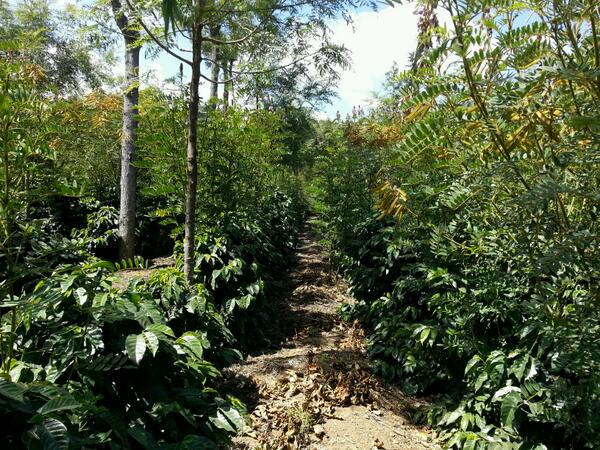
El Bosque is one of our most beloved farms and the huge reinvestment this farm has undergone is getting closer to realization. Located in the state of Chimaltenango near Parramos, I recently dropped by El Bosque to see the new varietals that are growing on the farm. They have the older Bourbon trees still in a few places which are topped, trimmed, and regrowing while producing moderate yields. Along with that plot are new plantings from the seeds of those old trees of heirloom Bourbon next to a plot with a number of newer dwarf Bourbon trees. These dwarf trees grow only three to four feet tall and are often called Bourboncito. While easier to pick and care for, the flavors are not as strong and distinct as the older trees. Beyond the Bourbon lots, there are several other new plantings we are excited about. Bosque now has Villa Sarchi planted, which many of you will associate with our Costa Rican coffees. The Villa Sarchi has always cupped well on other farms in Guatemala so we have big expectations. There is also some Yellow cherry planted on Bosque that needs identification but looks close to Caturra (some people argue if it's yellow it's likely Catuai). There's also some Pacamara and Gesha growing in a small test plots but these all need to be sampled at the end of harvest to see their potential. After five years, this farm is turning the corner on the agricultural side.
- Jaime | follow on twitter @jaime_vans and this blog for continued updates on this years harvest.


Evaluating for Quality: barismo's Roastery Manager, Tim Borrego revisits the reasons behind barismo's commitment to our specific brand of Direct Trade. The details always matter.

As a roastery, barismo is dedicated to what I like to think of as the pursuit of an authentic, quality focused product. Over the past five years as a local coffee roaster we have seen customers respond with overwhelming support for what we are doing, and we are grateful to see an amazingly complex product like coffee given the room to develop into what it is today. We have seen these same customers dive deep into the information that is offered and the stories behind the Direct Trade coffees that we promote. As we continue to introduce ourselves to new neighborhoods and new customers we hope that the message of our pursuit of quality is not boiled down to simply flavor experiences. Yes, we are confident in what we like and we hope to share that with you, but the relationships we develop behind these coffees are crucial to the sustainability of what we do. Direct Trade for us is about: seeking quality product at a sustainable price, working with appropriately sized (small) farms, developing sustainable long-term working relationships with producers based on mutual goals and respect. As we continue to give updates this buying season and as we release new crop coffees this year we want to give you more of that story and remind you that the mission behind our Direct Trade program at barismo is what makes this viable. We do not simply seek viability in the short term, rather, we have a long healthy future in mind, that is real Sustainability.
- Tim | check the blog for updates and contact directly at tim@barismo.com


Stay Fresh Updates: Upcoming events, classes and education, new coffees, and much more... Sign up to receive updates.

Thursday, February 20, 2014 from 7pm-10pm
Third Thursday Event at Brooklyn Boulders Somerville
Meet the roasters and taste some coffee! barismo will be hanging out at Brooklyn Boulders in Somerville serving up some samples of cold brew introducing ourselves to new neighbors. If you have not been to this excellent climbing gym in the heart of Somerville check them out online www.bkbs.brooklynboulders.com and on twitter @BKBSomerville

We will also be at Brooklyn Boulders for the "It takes Two" competition once it is rescheduled, see the BKBS website for more info.

Saturday, February 22, 2014 from 9:30am-2pm
barismo at the Somerville Winter Farmers Market
Grab a freshly roasted retail bag of barismo coffee from the well stocked selection, as well as a fresh, made-to-order pourover or a delicious cup of cold brew iced coffee. Catch us early cause it gets busy fast! We are there every week through the entire market. More info about the market from their facebook page or on twitter @SomWinterMarket