Featured Post

There and back again

My last few posts have covered a lot of ground on the early years and more recent events, but there's a messy middle. I could start this...

Tuesday, May 29, 2007

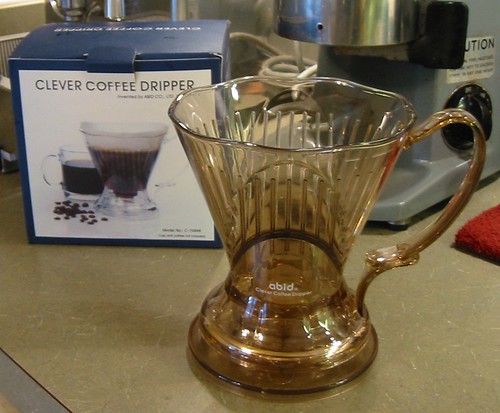
Abid "clever" coffee dripper


Other than vacpot (aka syphon), hand pour is another very popular coffee preparation method in Asia. In fact, it is the preferred method for non-espresso brewing method in Japan.

I've been wanting to try out this method for quite some time as I was told it made a different cup profile than vacpot. However, I never follow thru as I am intimidated by the various methodology and tools it required. I was also told it is a very technique-dependant method and can be quite inconsistent from operator to operator.

I first notice this little coffee gadget from mojocoffee's website. I was intrigued by its simplicity and promised ease of use. It's basically a pour-over cone with a stopper valve - you get the cleanness of the drip cone with full extraction of a french press. Best of all, it is stupid simple to use, very consistent, and takes less than 2 min from brewing to clean-up.

I made a request with my brother who is currently vacationing in Taiwan, and couple weeks later I got the unit delivered to my door.

Upon opening, I was quite impressed with the packaging. The graphic design is very well done (no "AS SEEN ON TV" style packaging here). Coupled with the high quality plastic (medical grade imported from Japan), it really made the unit felt substantial.

The design of the unit is very simple. It is basically a drip cone with a tiny plunger at the bottom of the unit. The plunger is connected to a plastic disk/ring. When the dripper is placed on its legs, the plunger will sealed the drip hole due to the weight of the plastic disk. When placed on top of a cup, the rim will push the disk up, lifting the plunger, and allow coffee to pass thru. The concept is so simple yet it worked so well.
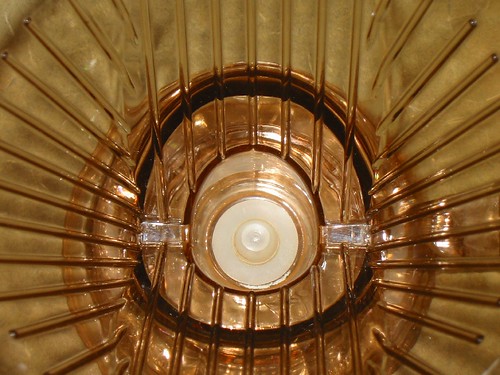

The brewing procedure are as followed:

1. Place paper filter in the cone. If desired, run some hot water thru to "wash" away paper taste.

2. Add coffee to the dripper. I use 32g per a full dripper brew (~ 12oz, ending w/ ~ 8oz of coffee).

3. Add hot water (198~202F, depends on the coffee) to the dripper. Make sure the grinds are well agitated. Stir if necessary.

4. Wait 1 min. Stir to break-up the crust.

5. Place the dripper on top of cup and let it drain. The drip time is roughly 60~90 seconds depending on the grind fineness.
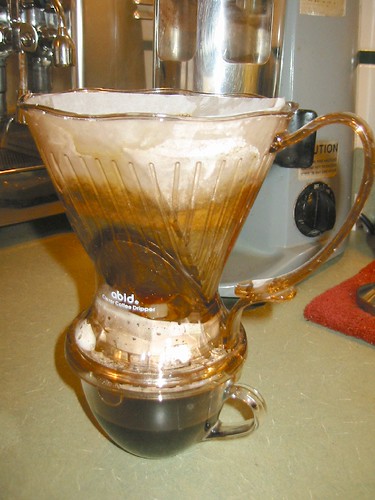

That is it. Clean up involved tossing away the paper filter and rinse the dripper. You get a cup that is aromatic, full flavored, and clean with a total dwell time of roughly 2 min (+ 60-90seconds of drain time).

"Clever" coffee dripper is clever indeed.


- Ben C.

Pandora's Box

'You take the blue pill and the story ends. You wake in your bed and believe whatever you want to believe. You take the red pill and you stay in Wonderland and I show you how deep the rabbit-hole goes. Remember -- all I am offering is the truth, nothing more.' - Morpheus, The Matrix

Ever wonder why not many ppl talk about green quality?

This question has been bugging me quite a lot lately. If you read any of the online forums, you will notice that so much focus was on the machines and barista techniques. The coffee itself is actually not often discussed, and those who do seem to love what they are tasting.

I really don't understand what is going on? Most of the coffee I sample these day pains me. With few exceptions, I found most don't live up to the fantastic description written on the bags/cupping notes. What are these ppl tasting? Is my palate so flawed that I could not pick up all the wonderful things that most are tasting? Why am I tasting so many defects?

I dunno.

Since April of this year, we have been roasting seriously and starting to pay attention to green quality (and everything that is wrong with it). Here are things that I've learned thus far:

- Roasting light reveals everything. The good, the bad, and the ugly. Green defects and age will shout at you loudly. Roast defects (mostly improper drying) will slap you in the face.

- Defects taste bad.

- Contrary to some ppl's belief, a well sorted defect-free green actually enhances complexity. The "definition" of the coffee increases as a result of clarity, and all flavor components are more focused and pronounced.

- Agey green sucks. It make the coffee taste like cheerio when roasted light, and taste like wood when roasted dark. Interestingly, that woody note tastes EXACTLY "like coffee". It's the generic flavor you find in extracts and gas station coffees.

- There is a direct correlation between how the green smells and the roasted coffee tastes. In fact, when roasted correctly, the green aroma components carry over to the roasted beans.

- Specialty grade coffee is not so special at all. Most are loaded with defects. Sit down and pick thru your beans. You will be surprised at how much crap is in there. The nastiest stuff I've seen so far are some beans from a "new crop" of Antigua that has fuzzy molds growing on it. It really made me sick to think I drank these before.

- Good quality greens do exit. Additional green sorting, vacuum packing, and air freighting are all options available - you just need to demand it and pay for it. The really good stuff is gobbled up by the Japanese and the Scandinavians.


Just like any food product, quality starts with raw ingredients. Everything you do afterwards is merely preserving and revealing the quality inside. There is nothing you can do to make a crappy green taste good - you can roast in such way to make it drinkable, but what's the point of shooting for the lowest common denominator?

So if green quality dictates the majority of what's in the cup, then how come not many are stressing over it? I think it's an accumulation of things that make it this way:

- Ppl don't really roast light - most of the "problems" are covered up this way.

- Ppl don't have the chance to taste defects - they end up associating it and accepting defect tastes as part of the coffee flavor.

- Ppl never truly sit down and get to know their beans. If they do, they are either oblivious to the problems or choose to ignore it.


Understanding green quality turns out to be one of the definitive turning points in my coffee experience. I truly did not know the kind of problem I would discover. Once your eyes are open, it's very scary and the light at the end of tunnel seemed so far away. There were so many issues and the lack of access often make me feel helpless. Suddenly, all these focus on equipments and barista techniques seemed meaningless - nothing really matters if I don't even have good ingredients to work with.

Will you choose the blue or the red pill? Are you prepared to face the demons from Pandora's box?


- Ben C.

Friday, May 25, 2007

Fresh bread and fresh coffee

Assume you, like a lot of us, grew up on wonder bread. Thin sliced and completely devoid of unique character. Now take it a step further and say you were eating wonder bread your whole life having only a limited selection of other breads which were also mass produced factory baked loaves. White, wheat, and 'hamburger buns' were your entire selection in the local grocer. You would become quite accustomed to toasting those limp lifeless slices and slathering them with all kinds of toppings so it won't be so 'dry.'


One day you come across a little artisan bakery. The flour is milled locally, the ingredients are farm fresh, and you go in to order some bread on a whim. The selection is overwhelming. Olive breads, focaccia, names and descriptions you don't begin to understand. It's just bread right, you think to yourself, why is it so complicated? You settle on a nice looking loaf of olive bread, ahh but it's not sliced like your wonder bread, what to do? You think to yourself, how do you toast this thing, because you are supposed to toast breads, right? Now what do you do for that BLT with extra mayo you had planned to go on a dry piece of toast?


What would be a normal reaction to this new experience? Rejection? Curiosity? Confusion?


This is an analogy for what happens in coffee. People walk into one of the few higher end or simply good coffee shops selling fresh roasted higher grade coffees and possibly single origin coffees and may be overwhelmed. These people tend to initially push for what's familiar to them and reject the rest so having options that don't involve whip cream and syrups while being offered something different may not appeal... at first. Coffee is coffee to them and the real estate for their laptop is possibly their biggest priority at the moment but that could change if they take the time to pay attention to what's in their cup. It's difficult for anyone who is newly introduced to a different view of coffee. Coffee has a pyramid of quality that is forming and not all coffee is on the same level. It's not the branding and marketing alone that define the offerings like in the chain stores, it may be the coffee itself that is the difference. Sure, you may go into Dunkin Donuts and get a 'regular coffee' which ironically comes doused in cream and sugar. Though, if you ask for a regular in a high end shop, they will ask you what origin and won't put condiments in it for you. They may even get offended if you do! You could go into Starbucks and get your well toasted coffees which are well past being fresh. Much like fresh bread though, coffee doesn't need to be so toasty if it's good quality and still fresh.


From a barista's perspective, the irony is there will always be that customer who comes in and knows you care about coffee who says, 'I love coffee' but in the next breath says 'I can't have it without cream or sugar.' In some cases, that's like telling the bakery you love bread but you intend to cover that olive bread in mayo for a BLT. It doesn't make sense because the fact is there are coffees that are fit for cream and there are some that simply are not. It would be ludicrous to drink bitter or lower grade coffees without cream and sugar but it would also be just as ludicrous to drink an expensive high grade one with those condiments.


I would offer that most customers who frequent the large chains have neither had a fresh roasted coffee nor had an ideally roasted coffee before. Like wonder bread, it will always be the same, but maybe that's not a good thing for everyone.

Friday, May 18, 2007

Virtual cupping club

Mr. Haeger of texas coffee peeps coined this term 'virtual cupping groups.'

Take a few samples of different coffees, or even better different roast profiles, and then send them out to several friends to blind cup them. Since they won't know cup contents, it's like having a virtual cupping table where nobody can smirk or grimace to influence the rest. The charm is that you get honest unbiased feedback from several sources at once on what you may have thought was an amazing cup or a severely defective one.

Sure it's a fun idea, but I do miss comments like the other night when a cohort smelled a green coffee sample and alarmedly said 'This smells like guinea pig's bedroom!'