Featured Post

There and back again

My last few posts have covered a lot of ground on the early years and more recent events, but there's a messy middle. I could start this...

Friday, February 23, 2007

Good barista like to watch, great barista like to taste...


Since the novelty of the bottomless portafilter has since come and gone (for most), the tagline that good Barista like to watch has been offered more than once. That's a silly statement because everyone likes to watch. Even if you don't like coffee, the novelty of a beautiful bottomless extraction is a great draw. There is a huge thread on the coffeegeek forums of simply people taking photos of glorious espresso shots.

Great. Good. Amazing. Let's frame it!


Thing is, I really want to see a barista sneak a shot in between orders and taste it. Not my shot! Maybe a throw away shot or a split shot where instead of throwing away half, keeping it and taking a sip to evalutate it. Yeah, that's the sign of a good barista, much like a good chef, always tasting everything.

Visuals can lie. Volumes can be off because of freshness or roast variations, but taste is the only way to go. Evaluating the shot by diagnosing it's taste. There are so many times I have found bad batches simply because I stopped and tasted a shot every now and then. Accountability is doing that step in quality control where you taste it.

You want to learn how to make the perfect shot? Well, first off, there is no perfect shot, only a series of great shots you will find once you become serious about espresso. The truth is though that you will never really progress as a barista, home barista, or general aficianado unless you learn to understand what you are tasting.

It's sour. What kind of sour and what is causing it?

The causes range from bean sours, defects, fermentation issues, clean fruit acidity, improper brew temps, improper dose, and possibly the roast profile. To put it simply, it's complicated. Then take into effect that you must diagnose this for not only your array of sours but for the many different bitters as well. Finding that balance where the cupping notes come through is hard.

The Barista controls the dose, grind, temperature, and an array of other minutia to tweak the most from each offering.

Taste. It takes experience and training and a lot of time drinking a lot of bad coffee to understand what is good.

For a Barista to identify the smoke and know that they need to up the dose and shorten the shot, that's a skill. That's why all the great Barista spend so much time learning to cup.

A good Barista knows taste.

Wednesday, February 21, 2007

Freezing Green For "Vintage" Coffees?


Wine is a beautiful thing. It is one of the products in this world in which the grower can create a bottle of wine and enjoy it year after year and watch it grow, mature, and change with time.

Coffee is not wine in that regard. Coffee is much more like produce in that it is a perishable product meant to be consumed with as little interference from the deteriorating effects of heat, moisture, and most importantly time. Freezing cannot increase the flavor of the coffee over time but makes it possible to keep coffee fresh until it is roasted.

I am all for freezing green to keep it fresh, but are so called “vintage" coffees a good idea? You could approach coffee like wine and vintage it. You could even save it for your kids to try, but why do this now when we have so much to look forward to?

At this point in time, our industry is still in its infancy. Since freezing obviously cannot increase the flavor of the coffee over time, why hoard it? One of the greatest things about this time in coffee is that we are at a point where we have everything to look forward to. If we want the coffee industry to continue to progress in the direction of product quality, what use is there in freezing coffee to be used several years from now? I see only detrimental effects to the industry from this. Every successful business has return customers. How can farmers be expected to create a consistently good coffee if they cannot rely on return customers? How can a farmer expect a return customer if the company buying it just freezes it to be sold when the company chooses and does not continue to buy that coffee year after year? If we want to continue to see consistently good washed coffees year after year, we must retain the seasonality of the coffee business and give farmers a chance to perfect their craft so that it is more repeatable. Especially at this time when so much growth is happening, this is important.

Vintage coffees also create false demand. If a roaster chooses to freeze a coffee for years to come, it creates the demand for consumers to buy that coffee when the roaster chooses to roast it, not when the coffee is still in season.

Everyone has favorite coffees that they want to continue to have again and again, but “vintaging” coffees means that at such a pivotal point in time as is now, farms that produce consistently good washed coffees will remain few in number.

It would be great to fill a vault with all the best coffees you have ever had. To take the best from each origin and make an all-star cupping table would be great. On the other hand, each year the coffees that come to the CoE cupping tables get better and better. Each year I taste coffee, I continue to taste new coffees that amaze me.

Not only would “vintage” coffees put another question mark in how the farmer will consistently be able to sell his coffee, but it will also cost much more for consumers. Freezing coffee costs a lot of money and why would the consumer want to pay for that cost if the coffee can be used faster and ultimately take less money to freeze ? I am willing to take the chance that next years coffee might not be as good, in order to assure that the next 10 years of coffee are.

Sunday, February 18, 2007

Cupping coffee clubs

Cupping coffee is one of the things I enjoy most. To cup is divine. In truth, it could be Tea or anything in the cup and if the flavor is there I would be happy.

Cupping is traditionally something you do when evaluating coffees in a professional capacity. Many of the best barista I know spend extra time and money cupping outside of work to build a better palate and understanding.

When I sit down for a cupping, it's largely a group of friends getting together to evaluate a coffee and enjoy it. That's not the norm but I think more people should consider this type of event. A coffee club if you will.

I think Ben originally called our group the Saturday Afternoon Coffee Club but that was a long time ago. A lot of faces came and went. In the end, we tightened up and had a small group of us who were really serious and no nonsense.

It doesn't need to be serious though and it can just be fun.

Dipping the grounds for the last drop
Photo courtesy of Gabe Rodriguez


Coffee can be fun but you have to distance yourself from the personal nature of the business. Inviting someone who works at a company to bring their own coffee to cup is not a good idea. If the invites don't keep an open mind, you can end up with someone who simply critiques everything but their own products.

When I was in Guatemala though, I got a big reminder of the joy of cupping.

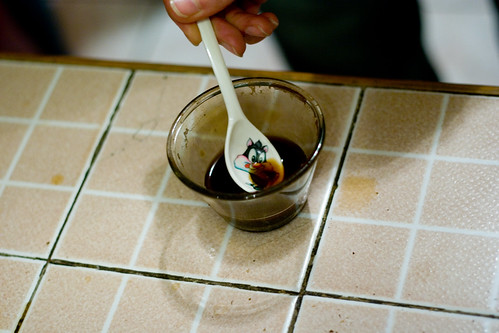
Edwin fetched us all personal cupping spoons, looney toons and the likes. it was a statement made unintentional. We were not the rock stars or the big egos, just the coffee people. No silver spoon, just ready to try something new.

Some of the joy gets sucked out of coffee when people become unwilling to see other perspectives. A lesson I took away from the trip is appreciation for others and their views. The flip side is that it left me with a bit to chew against the myopic and narrow minded people in the business.

All that aside, cupping an amazing coffee with a group of friends is great fun. We will be looking to get together with some of our local buddies and tap some old friends soon. It's time to start doing something and culture a bigger community.

Ideas or participants welcome...

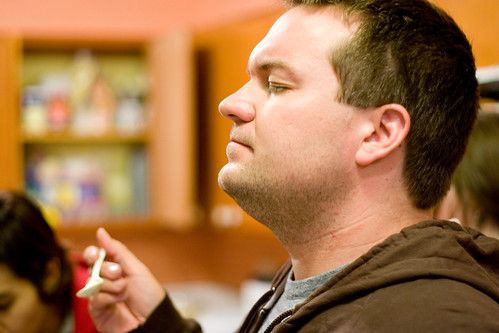
Jason's cupping face
Photo courtesy of Gabe Rodriguez

Friday, February 16, 2007

A retropsective on research...

This blog on coffee started one year ago. A few of the early posts were removed and lost but it has been a full year now of blogging.

I'd like to invite everyone to go back and browse a bit through all the wild stuff we've done or been blessed to be a part of. From 'coffee shots' to 'rooibos lattes' to home machine rebuilds and dosing debates, there's a lot of stuff we had a lot of fun with. I miss doing that stuff and playing with all those variables.

Things are about to pick up in the next few weeks and we will begin posting frequently soon.

A teaser of our newest project....
What does your kitchen table look like...

Details to follow in the next week...

Friday, February 09, 2007

New Toy


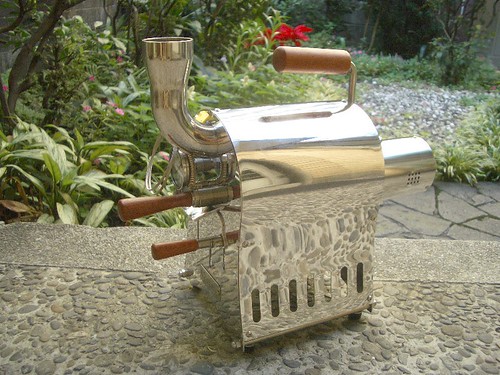
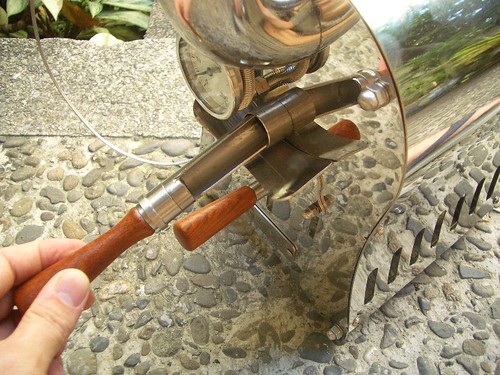
Huky300 Coffee Roaster
Capacity: 100~360g (3.5~12.7oz), 250g (8.8oz) recommended (limited by cooling)
Size: 16" x 7.5" x 14" (L x W x H)
Weight: 13 lbs
Mirror Polished 304 Stainless Steel


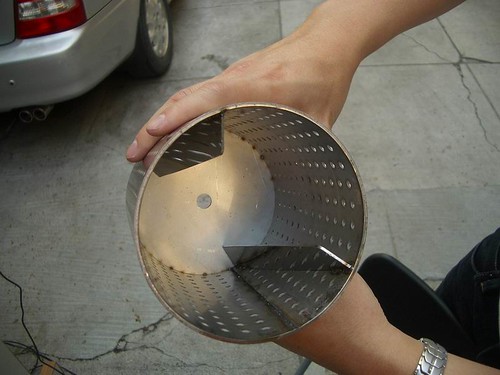
Perforated Stainless Steel Drum with dual agitator vanes (4.7" diameter x ~0.1" thick)
50rpm-24VDC motor (running @ 20VDC -40rpm)


Custom machined stainless steel axial/bearing (vacuum heat treated)


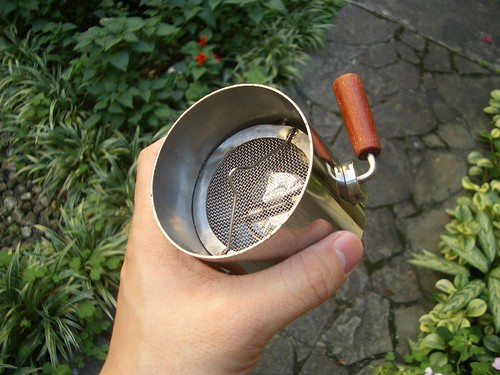
Bean sampler and quick release gate
Solid rosewood handle
Dual temperature probe: type-K thermocouple and analog


Exhaust vent with gate valve and chaff collector


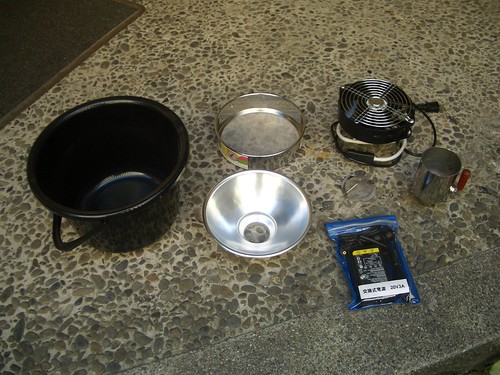
Accessories: Storage bucket, cooling basket, cooling/exhaust fan, DC power supply, bean funnel (hand made)


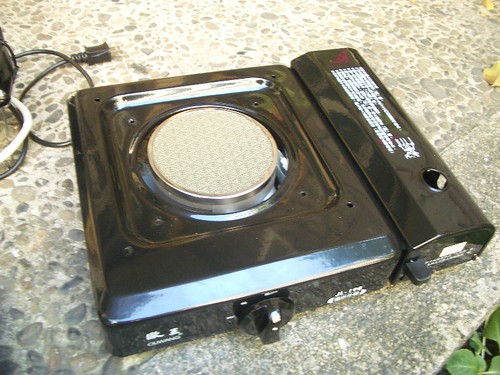
High-output Portable Butane Gas Stove with ceramic element (for infrared heat)


Just about every single piece on this roaster is hand made due to the limited production number. Everything is made to last at very high fit and finish (the thing is almost entirely of stainless). The craftsmanship is amazing.

I've done two roasts with it and it's not an easy roaster to use due to its all manual nature. I never use a direct flame drum roaster, let alone one that has air-flow control. The bean probe is very accurate and the thick gauge steel drum is able to retain heat once up to temperature. There are much to learn from this setup but I believe it will teach me more than any currently available home roasters (sample roaster does not count...).


- Ben C.